Author: admin

  • All-on-X Dental Implants in Whitehall, PA: Options for Missing Teeth

    All-on-X Dental Implants in Whitehall, PA: Options for Missing Teeth

    All-on-X Dental Implants replace missing tooth roots with small posts placed in the jawbone to support a full-arch restoration. Unlike traditional dentures that may shift, these implants anchor securely to provide lasting stability for your smile.

    Missing most or all of your teeth affects more than appearance; it impacts nutrition, speech, and confidence. Understanding treatment options helps patients make informed decisions about restoring their oral health.

    For patients considering All-on-X Dental Implants in Whitehall, Pennsylvania, understanding the process and recovery is key. Advanced & Comfort Dentistry evaluates bone density, gum health, and overall oral health to guide your care.

    How Do All-on-X Dental Implants Work to Replace a Full Arch of Missing Teeth?

    All-on-X Dental Implants work by using strategically placed titanium posts in the jawbone to support a complete set of replacement teeth. These implants integrate with the bone, creating a strong foundation for a full-arch restoration.

    Your dentist evaluates bone density plus gum health for strategic post placement. Targeted positioning helps support the restoration while preserving natural oral function and appearance.

    For patients seeking All-on-X Dental Implants Procedure in Whitehall, a comprehensive examination determines how many implants are needed and where they should be positioned for long-term support.

    Why is daily cleaning important for All-on-X Dental Implants?

    Daily cleaning is essential for All-on-X Dental Implants to remove plaque and food trapped under the bridge. Proper care prevents tissue irritation around the gumline, even though full-arch restorations cannot develop natural cavities. 

    1. Preventing Tissue Inflammation

    • Accumulating plaque causes peri-implant mucositis or peri-implantitis over time.
    • Inflammation threatens the supporting bone structure and soft tissues.

    2. Selecting Proper Cleaning Tools

    • Dentists recommend soft-bristled toothbrushes and implant-safe interdental cleaners.
    • Water flossers or specialized floss reach tight spaces beneath the bridge.

    3. Understanding Treatment Overview

    • Reviewing the treatment overview prepares aftercare questions. 
    • Following specific clinician instructions protects surgical sites during initial recovery.

    4. Managing Initial Recovery

    • Avoid disturbing surgical sites during early healing stages.
    • Follow instructions regarding rinsing, brushing, diet, and prescribed medications carefully.

    5. Maintaining Regular Recalls

    • Dental visits allow clinicians to check gum health and restoration stability.
    • Routine appointments help identify potential problems early for long-term success.

    Good home care supports long-term gum and bone health around your restoration. Tailoring daily cleaning advice in Implant Dentistry to your needs ensures optimal health, protecting your investment and keeping your smile comfortable. 

    What is the difference between All-on-X Dental Implants and individual implants?

    All-on-X Dental Implants use several strategically placed implants to support an entire connected arch of replacement teeth. In contrast, individual implants replace single missing teeth by placing separate posts for each restoration.

    • Target Area: Individual implants replace single teeth while full arch care replaces full rows.
    • Implant Count: Fewer posts support a connected arch compared to replacing every tooth separately.
    • Bone Prep: Limited upper jaw bone height may require a Sinus Lift before placement.
    • Treatment Scope: Connected restorations work well when numerous missing teeth cannot be saved.
    • Long Term Care: Both options require healthy supporting tissue, surgical planning, and maintenance.

    Evaluating factors like jawbone density, gum condition, and overall bite alignment helps your dentist determine the ideal restoration design. Reviewing the Advantages of All-On-X Dental Implants prepares you for consultation regarding long-term full-arch care benefits.

    All-on-X vs Individual Dental Implants

    All-on-X Dental ImplantsIndividual Implants
    Replaces a full archReplaces single teeth
    Uses multiple implantsUsually one per tooth
    Supports a full-arch bridgeSupports individual crowns
    Fewer implants for full archDepends on missing teeth
    May require fewer proceduresMay need multiple procedures
    Restores full-arch functionRestores individual teeth
    Best for extensive tooth lossBest for specific gaps

    What materials are used for All-on-X Dental Implants restorations?

    All-on-X Dental Implants use biocompatible titanium or ceramic posts paired with custom acrylic, composite, or zirconia bridges. Distinct materials are selected based on your bite forces and functional needs.

    1. Structure Options

    • Titanium posts anchor securely.
    • Bridges use durable zirconia.
    • Material selection balances strength.

    2. Preserving Tooth Structure

    • Dentists evaluate restorable natural teeth.
    • Root Canal Treatment saves teeth.
    • Care avoids unnecessary extractions.

    3. Diagnostic Planning

    • Advanced Dental Technology improves imaging.
    • Digital tools assist restoration design.
    • Modern equipment enhances evaluation accuracy.

    4. Long-Term Maintenance

    • Clinicians evaluate repairability options early.
    • Strategic design ensures accessible daily cleaning.
    • Teams match materials to bite force.

    Discussing repairability, cleaning access, and material options ensures long-term Dental Implants restoration success. A thorough examination helps determine whether preserving natural teeth or full-arch replacement offers the best outcome. 

    How long is Recovery after All-on-X Dental Implants surgery?
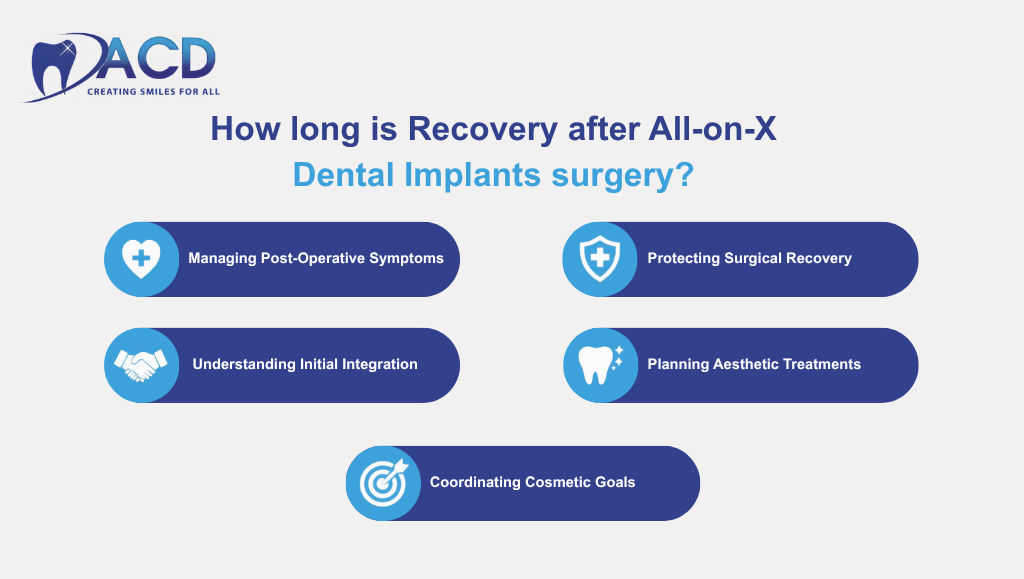
    DAll-on-X Dental Implants recovery timelines vary based on bone density, extractions, and healing rates. Patients commonly experience temporary swelling, minor bruising, and localized soreness during early healing. 

    1. Managing Post-Operative Symptoms

    • Initial Discomfort: Prescribed medications help manage localized swelling and soreness effectively.
    • Dietary Adjustments: Soft foods protect healing surgical sites during early recovery.

    2. Understanding Initial Integration

    • Temporary Restorations: Qualified patients receive temporary teeth based on implant stability.
    • Bone Integration: Implant posts integrate with jawbone tissues over several months.

    3. Protecting Surgical Recovery

    • Habit Restrictions: Avoiding smoking prevents serious surgical site healing complications.
    • Warning Signs: Persistent bleeding or worsening swelling requires immediate clinical attention.

    4. Planning Aesthetic Treatments

    • Facial Aesthetics: Optional Botox procedures do not assist dental implant integration.
    • Treatment Timing: Injections require careful scheduling around surgical recovery appointments.

    5. Coordinating Cosmetic Goals

    • Overall Aesthetics: A comprehensive Smile Makeover addresses remaining natural teeth.
    • Treatment Sequencing: Primary healing takes priority before beginning additional cosmetic care.

    Following aftercare guidelines supports optimal bone integration. Reviewing All-on-X Dental Implants Treatment Pros and Cons helps your dental team monitor healing progress for long-term stability before placing permanent teeth. 

    Key Features of All-on-X Dental Implants

    FeatureDetails
    PurposeFull-arch tooth replacement
    ImplantsMultiple implants
    RestorationFixed dental bridge
    FunctionImproves chewing
    AppearanceNatural-looking smile
    StabilitySecure fit
    CareDaily oral hygiene
    MaintenanceRegular dental visits

    Why choose Advanced & Comfort Dentistry for All-on-X Dental Implants?

    All-on-X Dental Implants are planned after reviewing jawbone support, existing teeth, and overall oral health. This assessment helps the dental team determine a suitable approach for restoring a full arch of missing teeth.

    Patients receive clear guidance on dental implant placement, healing, and long-term care. The dental team reviews options and explains each treatment stage to ensure informed decisions.

    Advanced & Comfort Dentistry serves Whitehall, Pennsylvania, offering personalized guidance for patients considering full-arch tooth replacement. A detailed assessment helps the team recommend implant care based on each patient’s oral health and restoration goals.

    Conclusion

    All-on-X Dental Implants restore full-arch function and appearance, helping patients regain confidence in chewing, speech, and smiling. The right solution depends on bone density, remaining tooth health, and individual restoration goals.

    The right treatment plan depends on an individual examination and comprehensive evaluation. Early assessment helps determine whether full-arch implants best protect your long-term oral health.

    Choose Advanced & Comfort Dentistry for personalized All-on-X Dental Implants care. Contact us now to discuss your options. Book Free Appointment to take the next step toward a fully restored, healthy smile.

    Frequently Asked Questions

    1. Who may be a candidate for All-on-X Dental Implants?

    People missing most or all teeth in an arch may qualify. A dentist must evaluate their jawbone, gums, medical history, bite, and ability to maintain the restoration before recommending treatment.

    2. Can I receive replacement teeth on the same day as implant surgery?

    Some suitable patients can receive a temporary restoration shortly after surgery. Immediate placement depends on implant stability, bone conditions, and the treatment plan; it is not appropriate for every patient.

    3. How long do full-arch dental implants last?

    Implants can last many years with good oral hygiene and regular dental care. The attached bridge may need repair or replacement over time, depending on wear, material, bite forces, and maintenance.

    4. What are the possible risks of full-arch implant treatment?

    Potential risks include infection, delayed healing, implant failure, nerve or sinus injury, and inflammation around implants. Your dentist should explain your individual risks and available alternatives before treatment.

    5. Are All-on-X Dental Implants more expensive than traditional dentures?

    They generally involve higher upfront costs because treatment includes surgery, implants, and a custom restoration. The total price depends on the number of implants, materials, additional procedures, and follow-up needs. Ask for a written estimate during your consultation.
  • Gum Disease Treatment in Whitehall, PA: Protect Your Gums

    Gum Disease Treatment in Whitehall, PA: Protect Your Gums

    Gum Disease Treatment addresses infection and inflammation affecting the gums and supporting bone, helping stop damage before it becomes severe. Left unmanaged, these issues can impact chewing comfort and long-term tooth stability.

    Gum problems rarely improve on their own, as ignoring early symptoms allows bacteria to spread deeper beneath the gumline. Understanding your treatment options helps you take action before the infection advances.

    For patients looking for Gum Disease Treatment in Whitehall, Pennsylvania, understanding the process is an important first step. Advanced & Comfort Dentistry evaluates gum health and bone support to guide a personalized care plan.

    What Is Gum Disease Treatment, and When Is It Recommended?

    Gum Disease Treatment refers to a range of dental procedures designed to control bacterial infection, reduce inflammation, and restore healthy gum tissue around the teeth. It becomes necessary when a dental exam reveals redness, swelling, bleeding, or early signs of bone loss near the gumline.

    Your dentist evaluates gum pocket depth plus bleeding patterns to determine the right course of care. Depending on severity, treatment may include specialized care that targets bacteria beneath the gumline while protecting the surrounding bone structure.

    For patients seeking Gum Disease Treatment Services in Whitehall, a comprehensive examination determines how advanced the condition has become and which procedures will restore long-term gum health most effectively.

    How Does Gum Disease Treatment Help Protect Gums?

    Gum Disease Treatment options vary based on infection levels and tissue health. A comprehensive evaluation guides your custom care plan. Early action protects natural teeth and supports lasting oral health. 

    1. Professional Cleanings

    • Removes plaque and tartar above the gumline before issues advance.
    • Helps maintain healthy gum tissue alongside routine oral hygiene.

    2. Deep Cleaning Procedures

    • Addresses advanced cases using Scaling and Root Planing to clean below the gumline.
    • Smooths root surfaces to prevent future bacteria accumulation.

    3. Antibacterial Therapy

    • Controls harmful bacteria directly within deeper gum pockets.
    • Supports tissue healing and reduces persistent inflammation.

    Patients evaluating Gum Disease Treatment in Pennsylvania should address bacteria early to prevent irreversible bone loss. Committing to an active treatment plan helps reduce bleeding, minimize sensitivity, and restore firm gum tissue. 

    What Early Signs Indicate a Need for Gum Disease Treatment?

    Recognizing symptoms early helps patients pursue Gum Disease Treatment before infection spreads or bone loss becomes severe. Regular dental visits remain essential since many early indicators are subtle and easy to overlook.

    Common Warning Signs

    • Swollen Gums: Puffy or sore tissue points to inflammation.
    • Bad Breath: Ongoing odor suggests underlying bacteria.
    • Bleeding Gums: Blood on floss serves as an early signal.
    • Receding Gumline: Teeth appearing longer indicate tissue pulling back.

    Progression Structural Impact

    • Loose Teeth: Shifting teeth point to weakened structures.
    • Bite Changes: A shifting bite suggests bone alterations.
    • Disease Stages: Symptoms advance from gingivitis to periodontitis.
    • Timely Assessment: Early evaluation prevents worsening.

    Understanding Gum Disease Stages helps patients recognize how quickly conditions progress. Scheduling an early evaluation protects natural tooth support and prevents permanent damage. Prompt care restores tissue health and keeps your smile stable. 

    Why Choose Advanced & Comfort Dentistry for Gum Disease Treatment?

    Gum Disease Treatment begins with a careful assessment of gum health and factors contributing to inflammation or infection. Each treatment plan is tailored to the patient’s symptoms, oral health needs, and the severity of the condition.

    During consultations, patients discuss their symptoms and treatment goals. The dental team explains suitable options, including Endodontics for inner-tooth problems and Dental Crowns & Bridges to restore damaged teeth.During appointments, patients can ask questions

    Advanced & Comfort Dentistry in Whitehall, Pennsylvania, helps patients understand their gum health and available treatment options. Clear guidance on procedures and follow-up care supports informed decisions for healthier gums.

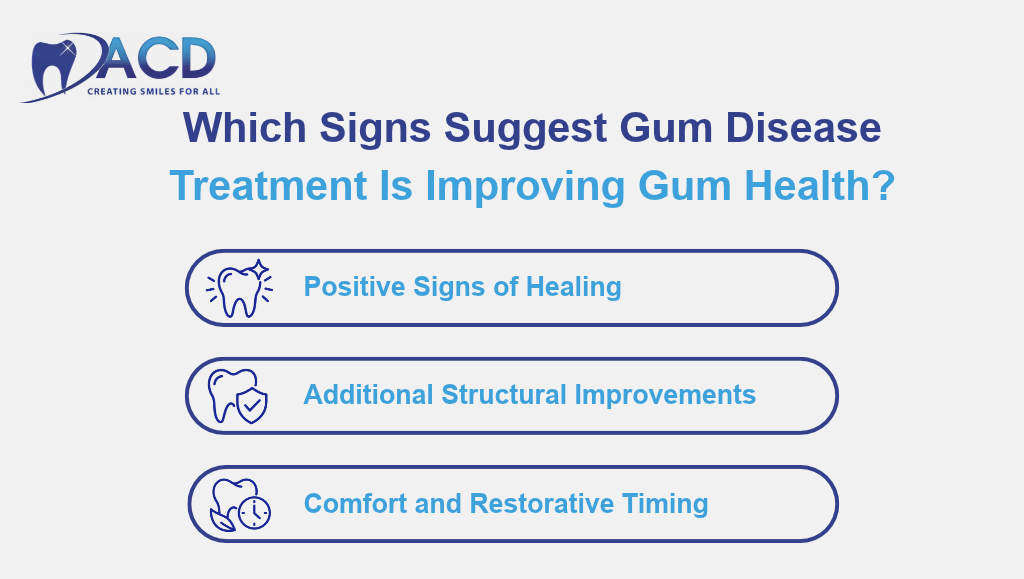
    Which Signs Suggest Gum Disease Treatment Is Improving Gum Health?

    Tracking progress helps patients understand whether their Gum Disease Treatment  plan is working as expected. Improvement is usually gradual, with noticeable changes appearing over several weeks of consistent home care and professional visits.

    1. Positive Signs of Healing

    • Reduced Bleeding: Tissue bleeds less frequently during daily brushing and flossing as inflammation subsides.
    • Firm Tissues: Swollen or tender areas gradually become firmer, healthier, and restore a natural pink color.

    2. Additional Structural Improvements

    • Improved Breath: Decreased bacterial activity beneath the gumline leads to fresher breath over time.
    • Shallower Pockets: Follow-up clinical measurements show reduced pocket depth around the supporting tooth structure.

    3. Comfort and Restorative Timing

    • Chewing Comfort: Decreased sensitivity allows patients to eat and chew daily meals without experiencing discomfort.
    • Stable Timing: Ensuring stable gum health is essential before proceeding with additional restorative procedures.

    Reviewing trusted resources helps patients plan for future treatments like Full and Partial Dentures or Clear Aligners. Even with visible healing, keeping scheduled follow-up visits remains essential for long-term stability. 

    Gum Disease Treatment Healing Timeline

    StageWhat to Expect
    Week 1Less bleeding
    Week 2Reduced soreness
    Month 1Firmer gums
    Month 2Fresher breath
    MaintenanceStable gums
    Regular CareFewer flare-ups

    Which Habits Support Successful Gum Disease Treatment?

    Daily habits play a significant role in how well Gum Disease Treatment works and how long results last. Professional care addresses existing infection, but consistent home habits help prevent gum disease from returning.

    Daily Habits That Help

    • Gentle Brushing: Soft bristles protect sensitive gums daily.
    • Regular Flossing: Removes plaque between tight teeth.
    • Antibacterial Rinses: Reduces harmful mouth bacteria levels.
    • Balanced Nutrition: Supports tissue repair and immunity.

    Habits to Avoid

    • Tobacco Products: Slows tissue healing and increases risk.
    • Skipping Visits: Allows hidden bacteria buildup over time.
    • Ignoring Symptoms: Bleeding tissue requires immediate attention.
    • Hard Bristles: Damages already tender gum tissue.

    Exploring Gum Disease Remedies complements professional care during recovery between appointments. When decay occurs alongside infection, Tooth-Colored Fillings repair damaged teeth while consistent home care protects long term healing.

    Gum Disease Treatment and Purpose

    TreatmentPurpose
    Deep CleaningRemove plaque
    ScalingClean teeth
    Root PlaningSmooth roots
    AntibioticsFight infection
    Gum SurgeryRepair gums
    Laser TherapyReduce bacteria
    Oral HygienePrevent buildup
    Regular CheckupsMaintain gum health

    Conclusion

    Gum Disease Treatment provides targeted care to address inflammation, infection, and bone loss when routine oral hygiene is no longer enough. Treatment removes harmful deposits and restores healthier gum tissues alongside daily home care. 

    The right treatment plan depends on an individual examination and comprehensive evaluation. Early evaluation helps identify gum irritation before issues become more advanced, protecting your natural teeth and surrounding support structures.

    Choose Advanced & Comfort Dentistry for personalized Gum Disease Treatment care. Schedule your consultation to discuss your symptoms and treatment options. Contact us today to take the next step toward healthier gums.

    Frequently Asked Questions

    1. Is gum disease treatment painful?

    Most procedures involve local anesthesia to keep patients comfortable. Mild soreness afterward is common but typically resolves within a few days.

    2. How long does treatment take to show results?

    Many patients notice reduced bleeding and swelling within a few weeks, though full healing depends on the severity of the condition.

    3. Can gum disease come back after treatment?

    Yes, gum disease can return without consistent home care and regular professional maintenance visits.

    4. Will I need multiple appointments?

    Treatment duration varies based on severity. Advanced cases may require several visits for deep cleaning and follow-up monitoring.

    5. How often should I see the dentist after treatment?

    Most patients benefit from maintenance visits every three to four months to monitor healing and prevent recurrence.

  •  Invisalign Clear Aligners in Whitehall, PA: Straighten Your Smile

     Invisalign Clear Aligners in Whitehall, PA: Straighten Your Smile

    Invisalign Clear Aligners offer a discreet, removable approach to correcting common alignment concerns, helping adults and teenagers improve confidence without traditional metal braces.

    Modern orthodontic solutions are tailored to individual oral health and smile goals. Understanding how aligners work, who benefits, and what treatment involves helps patients make informed decisions.

    A comprehensive evaluation at Advanced & Comfort Dentistry helps determine whether Invisalign Clear Aligners in Whitehall, Pennsylvania fit your alignment needs and long-term goals.

    How Do Invisalign Clear Aligners Work to Straighten Teeth?

    Invisalign Clear Aligners use a series of custom-made, transparent trays to move teeth gradually into planned positions. Each aligner applies controlled pressure to specific teeth, helping improve alignment over time.

    The process begins with a dental examination and digital scans or impressions. These records help the dental professional plan tooth movements, evaluate oral health, and determine the exact sequence of aligners.

    For patients exploring Invisalign Clear Dental Aligners in Whitehall, Pennsylvania, a comprehensive evaluation determines how treatment can address alignment needs and support long-term oral health.

    Which Patients Are Good Candidates for Invisalign Clear Aligners?

    Invisalign Clear Aligners may suit adults and teenagers who want to correct crooked teeth, mild to moderate crowding, spacing, or selected bite problems. Suitability depends on:

    • Alignment Severity: The location and complexity of the bite or spacing issue.
    • Gum and Tooth Health: Existing dental work or gum concerns may need attention first.
    • Compliance Ability: Comfort with removing trays for meals and cleaning teeth consistently.
    • Wear Schedule: Most plans recommend wearing aligners 20 to 22 hours daily.

    Complex bite problems may require braces or another approach. A consultation helps determine if clear aligners, traditional braces, or a complementary Cosmetic Dentistry option is appropriate. You can also explore Types of Invisalign Clear Aligners to learn about different options. 

    What Is the Difference Between Invisalign Clear Aligners and Traditional Braces?

    Both options can straighten teeth, but Invisalign Clear Aligners and traditional braces work differently to suit different clinical situations. 

    • Removable Design: Aligners can be taken out for eating and cleaning, while braces stay fixed to the teeth.
    • Appearance: Aligners are transparent; braces use visible brackets and wires.
    • Treatment Suitability: Braces can manage a broader range of complex tooth movements.
    • Compliance: Aligner success depends on consistent daily wear rather than a fixed appliance.

    Invisalign Clear Aligners vs Traditional Braces

    FeatureClear AlignersTraditional Braces
    AppearanceNearly invisibleVisible brackets
    RemovableYesNo
    EatingRemove before mealsAvoid hard, sticky foods
    CleaningEasy removalCareful cleaning needed
    SuitabilityDepends on the caseHandles complex cases
    ComplianceRequires daily wearFixed to teeth

    Why Choose Advanced & Comfort Dentistry for Invisalign Clear Aligners?

    Invisalign Clear Aligners at Advanced & Comfort Dentistry are tailored to your oral health needs. An evaluation of your teeth, bite, and gums helps determine if clear aligners are right for improving alignment and confidence.

    During your consultation, the dental team discusses your goals, fees, appointment schedules, and retainer needs. They also assess whether General & Restorative Dentistry or Teeth Whitening Treatment should be completed first.

    Patients in Whitehall, Pennsylvania, receive personalized orthodontic guidance to ensure their recommended treatment addresses their dental health needs while improving alignment and appearance.

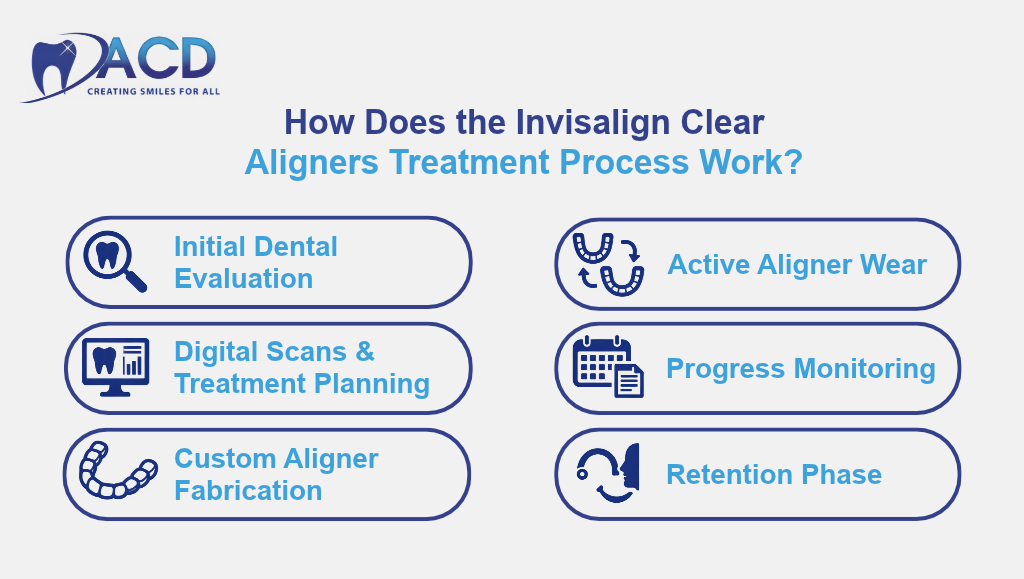
    How Does the Invisalign Clear Aligners Treatment Process Work?

    Invisalign follows targeted stages to gradually move teeth into their planned positions. Each stage supports a predictable, comfortable treatment experience.

    1. Initial Dental Evaluation

    • Assess Oral Health: The dentist examines your teeth, gums, and bite.
    • Review Alignment Needs: The treatment area is evaluated for clear aligners or alternative options, including whether patients with missing teeth should discuss Dental Implants separately.

    2. Digital Scans Treatment Planning

    • Capture Digital Impressions: Scans or impressions record the current position of your teeth.
    • Create a Personalized Plan: The team maps out the sequence of tooth movements and estimated timeline.

    3. Custom Aligner Fabrication

    • Design Your Aligner Series: A set of clear trays is custom-made based on your treatment plan.
    • Receive Wear Instructions: Your dentist explains how long to wear each tray and when to switch sets.

    4. Active Aligner Wear

    • Wear Aligners Consistently: Trays are generally worn 20 to 22 hours daily.
    • Change Trays as Directed: Progress to the next aligner in the series on schedule.

    5. Progress Monitoring

    • Attend Follow-Up Visits: Appointments allow the dentist to track tooth movement.
    • Adjust the Plan if Needed: Aligners may be modified if teeth are not tracking as expected.

    6. Retention Phase

    • Complete Active Treatment: Once the final aligner is worn, the dentist reviews your results.
    • Begin Retainer Use: A removable or fixed retainer helps maintain your new tooth positions.

    Treatment duration varies. Some cases take several months, while others require a year or longer, depending on tooth position, bite complexity, and consistency of wear.

    How Can You Protect Your Invisalign Clear Aligners Results Long Term? 

    Consistent care helps maintain your results with Invisalign Clear Aligners while protecting the overall health of your surrounding teeth and gums. Daily maintenance and routine dental checkups ensure long-lasting alignment and stability. 

    Daily Care

    • Wear Aligners as Directed: Keep trays in for 20 to 22 hours daily for best results.
    • Brush Before Reinserting: Clean teeth after meals to prevent trapped food and plaque.
    • Clean Aligners Gently: Use a soft toothbrush and cool water to avoid distorting the plastic.
    • Store Trays Properly: Keep aligners safely in their protective case when not in use.

    Follow-Up and Healthy Habits

    • Attend Regular Checkups: Allow your dentist to monitor progress and adjust aligner fit.
    • Wear Your Retainer: Follow your post-treatment retainer schedule to prevent teeth from shifting.
    • Report Problems Promptly: Contact your dental team immediately if aligners cause persistent discomfort.
    • Maintain Overall Oral Health: Patients with minor imperfections may benefit from Dental Bonding after alignment is complete.

    Which Foods and Habits Should You Follow With Invisalign Clear Aligners?

    Simple daily choices with Invisalign Clear Aligners help keep treatment on track, prevent staining, and protect the aligner trays from damage. 

    Habits to Follow

    • Drink Plain Water: Water is the only recommended beverage while wearing trays.
    • Remove Before Eating: Take out aligners before meals and snacks, then clean your teeth before reinserting them.

    Habits to Avoid

    • Hot Beverages While Wearing Trays: Heat can warp the aligner material.
    • Eating or Drinking Other Than Water With Trays In: This can trap food debris and stain the plastic.
    • Wrapping Trays in Napkins: This increases the risk of accidentally discarding them.

    Can Invisalign Clear Aligners Be Part of a Broader Smile Makeover?

    Some patients want more than straighter teeth with Invisalign Clear Aligners. They may also want to improve tooth color, shape, or the appearance of small gaps. 

     For suitable patients, Dental Veneers may address changes in shape, chips, or discoloration once orthodontic treatment is complete.

    Some patients also need treatment for severely damaged or infected teeth before beginning elective orthodontic care. In those situations, Tooth Extraction may be discussed only when the clinical assessment supports removal.

     You can also review the Benefits of Invisalign Clear Aligners when comparing their convenience with other orthodontic options.

    Invisalign Clear Aligners: Key Facts

    AspectDetails
    PurposeStraightens misaligned, crowded, or gapped teeth
    StructureSeries of custom, removable clear trays
    Wear TimeApproximately 20 to 22 hours daily
    RemovabilityYes, for eating and cleaning
    AppearanceTransparent and discreet
    MonitoringRegular follow-up appointments
    RetentionRemovable or fixed retainer after treatment
    DurationVaries from several months to over a year

    Conclusion

    Invisalign Clear Aligners offer a discreet, removable option for a straighter smile, improving confidence, supporting a balanced bite, and simplifying oral hygiene, with success relying on proper case selection, daily wear, professional tracking, and retainer use. 

    Our team helps patients explore treatment options based on their needs and goals. A consultation can clarify whether clear aligners are appropriate, what treatment involves, and whether other dental services should be completed first.

    Advanced & Comfort Dentistry provides personalized care to help you achieve a healthier smile with Invisalign Clear Aligners. Contact us now to ask about available clear-aligner options and Book Free Appointment for your consultation. 

    Frequently Asked Question

    1. Will I Experience Discomfort During Invisalign Clear Aligners Treatment?

    Patients may feel pressure or mild tenderness when starting treatment or changing trays. This generally improves with time. Contact your dentist if pain persists.

    2. Can I Eat While Wearing Clear Aligners?

    Aligners should be removed before eating. Drink only plain water while wearing Invisalign Clear Aligners, and clean your teeth before reinserting the trays.

    3. How Many Hours per Day Should I Wear My Aligners?

    Most plans recommend wearing Clear Aligners approximately 20 to 22 hours per day. Your dentist will confirm the schedule for your case.

    4. Will I Need a Retainer After Treatment?

    Yes. A retainer helps maintain tooth position after active treatment. Your provider will recommend the appropriate type and wear schedule.

    5. Are Clear Aligners Suitable for Everyone?

    No. They treat many alignment concerns, but complex cases may require braces or another approach. A dental evaluation determines the right option.

  • Understanding Endodontics in Whitehall, Pennsylvania

    Understanding Endodontics in Whitehall, Pennsylvania

    Endodontics treats problems affecting the inner tooth, root canals, and surrounding tissues. Tooth pain can affect daily activities, especially when the pulp or root is involved. Endodontics in Whitehall, Pennsylvania helps patients understand their treatment options and feel more prepared for care.

    At Advanced & Comfort Dentistry, patients can discuss their symptoms, treatment options, and the goal of preserving healthy natural teeth whenever possible. Understanding the treatment process can help patients make informed decisions about their dental care.

    Endodontics treats problems affecting the inner tooth, root canals, and surrounding tissues. When deep tooth pain involves the pulp or root, understanding Endodontics in Whitehall, Pennsylvania can help patients feel more prepared for treatment. 

    What Is Endodontics?

    Endodontics is a dental specialty focused on the tooth pulp and tissues around the roots. It helps diagnose and treat problems such as inflammation, infection, and tooth pain.

    One of the most common Endodontic Treatments is root canal treatment, which removes infected pulp, cleans the root canals, and seals the tooth. Treatment may also be needed after a crack, deep cavity, or dental injury damages the pulp.

    Patients researching Endodontics in Whitehall, Pennsylvania may need care for persistent sensitivity, biting pain, swelling, or gum tenderness. Early evaluation can help determine if the natural tooth can be saved and restored.

    Who Is a Good Candidate for Endodontics?

    Endodontics may be appropriate for patients with pulp inflammation, infection, or internal tooth damage when the natural tooth can still be restored. An evaluation is important even without severe pain, as an Endodontic Procedure may be needed to treat tooth pulp problems. 

    1. Patients With Tooth Pain or Sensitivity

    • Lingering sensitivity to hot or cold may indicate pulp problems.
    • Pain while chewing or biting can be a sign that the tooth needs evaluation.

    2. Patients With Damaged Teeth

    • Cracked, chipped, or injured teeth may have damage inside the tooth.
    • Deep tooth decay can affect the pulp and may require endodontic treatment.

    3. Patients With Infection or Swelling

    • Swollen or tender gums may indicate infection around the affected tooth.
    • A pimple or drainage near the tooth can also require professional evaluation.

    4. Patients With Tooth Discoloration

    • Teeth Whitening may be considered after evaluating underlying dental concerns.
    • An examination can help determine whether the pulp is healthy.

    5. Patients With Restorable Teeth

    • The amount of remaining tooth structure can affect treatment suitability.
    • Endodontics in Pennsylvania may be considered when the natural tooth can be treated and restored.
    • If the tooth cannot be saved, Tooth Extractions may be discussed after a complete evaluation. 

    A professional evaluation helps determine whether endodontic treatment is appropriate and whether saving the natural tooth is practical.

    Which Treatments Does Endodontics Include?

    Endodontics may include different treatments depending on the condition of the tooth and the cause of the problem.

    1. Root Canal Treatment

    • Treats Infected Pulp: Removes damaged or infected pulp from inside the tooth.
    • Preserves the Natural Tooth: Cleans, disinfects, and seals the root canals to help save the tooth.

    2. Endodontic Retreatment

    • Treats Previous Treatment: May be recommended when a previously treated tooth does not heal properly.
    • Cleans the Canals Again: Removes old filling material, cleans the canals, and reseals the tooth.

    3. Endodontic Surgery

    • Treats Persistent Infection: May address infection around the root that cannot be treated through the crown.
    • Includes Apicoectomy: Removes the affected root tip and surrounding tissue when necessary.
    • In more complex cases, Oral Surgery may be considered when additional surgical care is required. 

    The appropriate treatment depends on the tooth’s condition, surrounding tissues, and overall oral health. In some cases, tooth replacement options may be discussed when the natural tooth cannot be saved. 

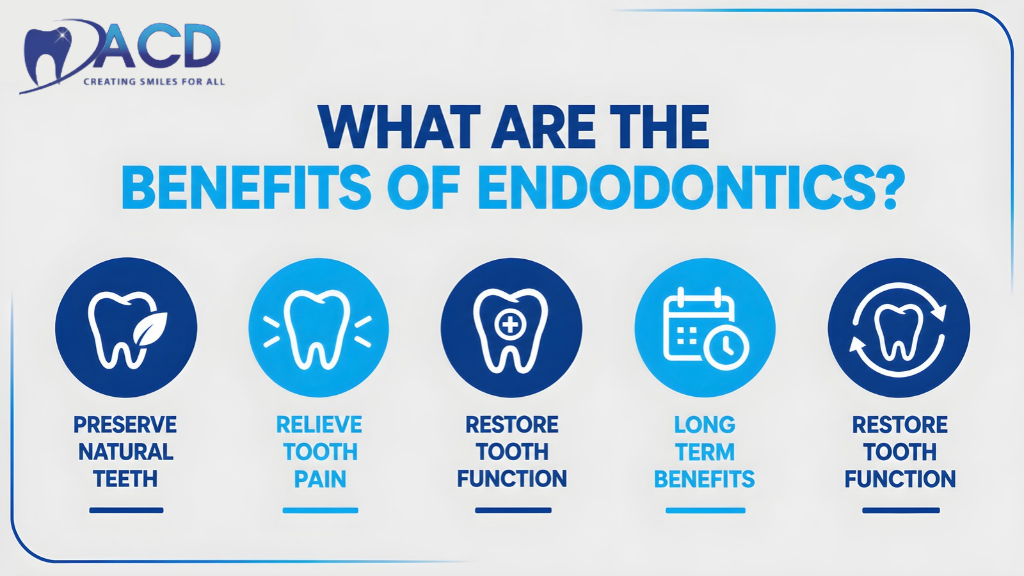
    What Are the Benefits of Endodontics?

    1. Preserve Natural Teeth

    • Helps save natural teeth.
    • Maintains normal chewing.
    • Avoids immediate extraction.

    2. Relieve Tooth Pain

    • Treats infected pulp.
    • Reduces tooth discomfort.
    • Improves daily comfort.

    3. Treat Dental Infections

    • Removes infection.
    • Protects surrounding tissues.
    • Supports oral health.

    4. Restore Tooth Function

    • Supports chewing and biting.
    • Protects remaining tooth structure.
    • Maintains normal tooth function.

    5. Support Long-Term Oral Health

    • Helps preserve tooth stability.
    • May reduce replacement needs.
    • Supports ongoing dental health.

    Information about Regenerative Endodontics also describes approaches within the broader field of endodontic care. 

    Endodontics Key Benefits for Patients

    BenefitWhy It Matters
    Preserves the natural toothHelps maintain familiar chewing and biting
    Treats internal infectionAddresses the problem inside the tooth
    Supports comfortLocal anesthesia helps keep treatment comfortable
    Maintains tooth positionHelps reduce unwanted movement of nearby teeth
    Restores functionAllows the tooth to return to normal use after restoration

    Patients who need to protect their treated tooth may also receive guidance related to Preventive Dentistry and Dental Bonding when suitable. 

    What Happens During Endodontics Treatment?

    Knowing what to expect can make Endodontics easier to understand. Treatment usually includes diagnosis, cleaning, sealing, restoration, and aftercare.

    1. Examination and Diagnosis

    • The dentist reviews your symptoms and examines the affected tooth and surrounding tissues.
    • X-rays or other diagnostic tests may be used to identify the source of the problem.

    2. Numbing and Isolation

    • Local anesthesia is used to keep the treatment area comfortable during the procedure.
    • The tooth is isolated to keep it clean and protected during treatment.

    3. Cleaning the Root Canals

    • The damaged or infected pulp is removed from inside the tooth.
    • The root canals are carefully cleaned, shaped, and disinfected to remove bacteria.

    4. Filling and Sealing

    • After cleaning, the root canals are filled with a suitable material and sealed.
    • A temporary restoration may be placed until the final restoration is completed.

    5. Final Restoration and Aftercare

    • A filling or crown may be recommended to protect the treated tooth and restore its function.
    • Following dental instructions and attending follow-up visits can support proper healing.
    • When appearance is also a concern after treatment, a Cosmetic Dentist may discuss suitable options. 

    Patients researching Endodontics in Pennsylvania can discuss the treatment process, restoration needs, and recovery expectations with their dental provider.

    Why Choose Advanced & Comfort Dentistry for Endodontics?

    Choosing a provider for Endodontics means choosing a team that can explain the problem clearly and help you understand your treatment options. Patients deserve straightforward communication about the diagnosis, expected procedures, possible alternatives, and follow-up care.

    Advanced & Comfort Dentistry is focused on helping patients make informed dental decisions based on their individual needs. A consultation can help clarify whether the goal is to save the tooth, what treatment may be appropriate, and how the tooth should be protected afterward.

    Patients considering Endodontics in Whitehall, Pennsylvania should not ignore persistent tooth pain, swelling, or sensitivity. A timely evaluation can help identify the cause and prevent a treatable problem from becoming more complicated.

    Conclusion

    Endodontics can provide an important tooth-saving option when the pulp becomes inflamed, infected, or damaged. Root canal treatment, retreatment, and selected surgical procedures can address different internal tooth problems while supporting natural tooth preservation.

    If you are experiencing ongoing tooth pain, sensitivity, swelling, or discomfort when chewing, professional evaluation is more reliable than trying to diagnose the problem yourself. With the right diagnosis and treatment plan, patients can move toward better comfort and restored dental function.

    Advanced & Comfort Dentistry is here to provide thoughtful, patient-centered care for individuals and families in the Whitehall area. Contact Us Today to schedule your dental visit, discuss tooth pain or sensitivity, and learn whether Endodontics may be right for your needs.

    Frequently Asked Questions

    1. Is Endodontics the same as a root canal?

    No. Endodontics is the specialty that deals with the inside of the tooth and tissues around the roots. A root canal is one of the most common procedures within this specialty.

    2. Does Endodontics treatment hurt?

    Local anesthesia helps numb the treatment area. Some tenderness may occur after treatment, but modern techniques are designed to keep patients comfortable during the procedure.

    3. How do I know if I need Endodontics?

    Lingering sensitivity, pain when biting, swelling, gum tenderness, or a damaged tooth may indicate a pulp problem. A dental examination is necessary to determine the actual cause.

    4. Can Endodontics save my natural tooth?

    In many cases, yes. The dentist evaluates the remaining tooth structure and surrounding tissues to determine whether the natural tooth can be successfully treated and restored.

    5. How soon should I seek treatment for tooth pain?

    Arrange an evaluation promptly when pain persists, especially when swelling, drainage, fever, or strong sensitivity develops. Early assessment may help prevent the condition from becoming more difficult to manage.

  • General Dentistry in Whitehall, Pennsylvania: Dental Services for Your Needs

    General Dentistry in Whitehall, Pennsylvania: Dental Services for Your Needs

    General Dentistry in Whitehall, Pennsylvania helps patients maintain healthy teeth and gums through routine examinations, cleanings, preventive care, and treatment of common dental concerns. Regular visits can also help identify problems early, before they become more complex.

    Many patients ignore early signs such as sensitivity, bleeding gums, bad breath, or mild discomfort. A routine dental evaluation can help determine the cause and recommend appropriate care based on your needs.

    At Advanced & Comfort Dentistry, patients receive personalized care designed around their comfort, oral health, and long-term needs. This guide explains General Dentistry in Pennsylvania, the services it includes, its benefits, and what to expect during a dental visit.

    What Is General Dentistry?

    General Dentistry focuses on everyday dental care, including examinations, cleanings, preventive care, and treatment for common oral health problems. It helps patients maintain healthy teeth and gums over time.

    For patients seeking General Dentistry in Whitehall, routine visits can help detect cavities, gum concerns, damaged restorations, and other issues early. These appointments also give patients a chance to discuss sensitivity, discomfort, or changes in their oral health.

    General Dentistry in Pennsylvania provides a foundation for ongoing dental care, with treatment recommendations based on each patient’s needs. At Advanced & Comfort Dentistry, the goal is to provide personalized care while helping patients feel comfortable and informed.

    Which Services Does General Dentistry Include?

    General Dentistry helps prevent and treat common dental problems, including Restorative Dentistry for damaged or decayed teeth. The right treatment depends on your oral health, dental history, and individual needs.

    1. Dental Examinations

    • Checks Oral Health: Regular examinations help identify cavities, gum problems, and other dental concerns.
    • Detects Problems Early: Early evaluation can help address issues before they become more serious.

    2. Professional Teeth Cleanings

    • Removes Plaque and Tartar: Professional cleanings remove buildup that regular brushing may not fully eliminate.
    • Supports Gum Health: Cleanings help maintain healthier gums and a cleaner smile.

    3. Dental Fillings

    • Treats Tooth Decay: Dental Fillings are commonly used to repair teeth affected by cavities.
    • Preserves Tooth Structure: Removing decay and filling the affected area can help protect the remaining natural tooth.

    4. Gum Health Evaluations

    • Checks Gum Condition: Your dentist can look for signs of inflammation, bleeding, or gum disease.
    • Provides Personalized Care: Recommendations may include improved home care or additional treatment when needed.

    5. Oral Health Screenings

    • Monitors Oral Changes: Routine screenings can help identify unusual changes in the mouth.
    • Supports Ongoing Care: Regular monitoring helps your dental team track your oral health over time.

    For patients seeking General Dentistry in Whitehall, additional services may be recommended when specialized care is needed. Those interested in improving their smile may consult a Cosmetic Dentist. 

    How Often Should You Get General Dentistry?

    Most patients benefit from a dental visit about every six months, but your schedule may vary depending on your oral health, dental history, and individual needs.

    1. Every Six Months

    • Schedule routine dental checkups to monitor your teeth and gums.
    • Get professional cleanings to remove plaque and tartar buildup.
    • Discuss any new sensitivity, discomfort, or changes in your oral health.

    2. More Frequent Visits

    • Some patients may need visits more often because of cavities or gum problems.
    • Frequent appointments may help patients with existing dental restorations or other risk factors.
    • Your dentist may recommend a shorter interval when closer monitoring is needed.

    3. Personalized Schedule

    • Your visit schedule should reflect your dental history and current oral health.
    • Factors such as hygiene habits, age, and previous treatment may affect your schedule.
    • Regular visits can help identify potential problems before they become more serious.

    For patients seeking General Dentistry in Whitehall, your dentist can recommend a visit schedule that fits your specific dental needs.

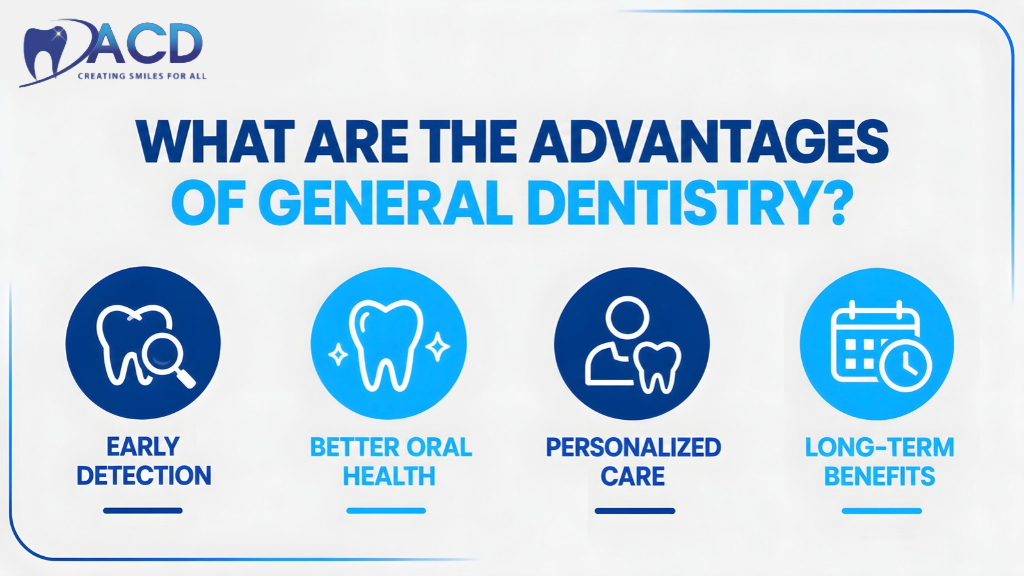
    What Are the Advantages of General Dentistry?

    General Dentistry helps maintain oral health and address concerns early, providing General Dentistry Benefits for long-term oral health.

     Key advantages include:

    1. Early Detection

    • Finds cavities and gum problems early
    • Helps prevent bigger dental issues
    • Supports timely treatment

    2. Better Oral Health

    • Keeps teeth clean and healthy
    • Supports healthy gums
    • Improves daily dental care

    3. Personalized Care

    • Based on your dental needs
    • Guides suitable treatment
    • Helps protect natural teeth

    4. Long-Term Benefits

    • Monitors changes over time
    • Supports regular dental care
    • Helps maintain a healthy smile

    What Happens During a General Dentistry Visit?

    A General Dentistry appointment is usually straightforward and focuses on understanding your current oral health. Your dentist discusses your concerns, reviews relevant information, and performs an examination.

    Step 1: Review Your Dental History

    • Discuss Your Concerns: The dental team may ask about tooth pain, sensitivity, bleeding gums, bite changes, medications, previous procedures, and other concerns.
    • Review Relevant Information: Your dental history helps identify risk factors and guide the examination.

    Step 2: Complete the Dental Examination

    • Examine Your Teeth and Gums: The dentist checks your teeth, gums, bite, restorations, and other oral structures for potential problems.
    • Take X-Rays When Needed: X-rays may be recommended when clinically appropriate to identify issues that are not visible during a visual examination.

    Step 3: Receive Professional Cleaning

    • Remove Plaque and Calculus: Professional cleaning can remove buildup that regular brushing and flossing may not completely eliminate.
    • Review Oral Hygiene: Your dental team may provide guidance on brushing, flossing, and maintaining oral health, highlighting the Importance of General Dentistry. 
    • Patients seeking General Dentistry in Pennsylvania can also ask questions about their daily oral hygiene routine.

    Step 4: Discuss Treatment Recommendations

    • Review Findings: If a concern is identified, your dentist explains the findings and discusses suitable treatment options.
    • Consider Appropriate Treatment: A cavity may require Dental Fillings, while a missing tooth may eventually require Implant Dentistry.
    • Understand Common Procedures: The General Dentistry Procedures resource provides an overview of common procedures and why they may be recommended.

    Understanding Your Preventive Care Plan

    For patients looking for General Dentistry in Whitehall, prevention is an important part of routine dental care.

    • Preventive Dentistry: This may include professional cleanings, oral hygiene education, monitoring, and strategies that help reduce avoidable dental problems.
    • Address Minor Concerns: Dental Bonding may be discussed for minor cosmetic or structural concerns that do not require extensive treatment.

    Why Routine Monitoring Matters

    General Dentistry is not only about treating existing problems. Regular visits allow your dental professional to monitor changes and recommend care when needed.

    • Track Oral Health Changes: Comparing current findings with previous visits can help identify developing concerns.
    • Plan Future Care: Patients needing tooth replacement may be evaluated for Implant Dentistry, while those with ongoing risks can benefit from continued Preventive Dentistry guidance.
    • Maintain Oral Health: Consistent monitoring and professional care support healthier teeth and gums over time.

    General Dentistry Services, Benefits & Importance 

    TopicKey BenefitsWhy It Matters
    Dental ExaminationsOral exams, screenings, X-rays when neededHelps detect dental problems early
    Professional CleaningsPlaque and tartar removal, hygiene guidanceSupports cleaner teeth and healthier gums
    Dental FillingsRepairs cavities and damaged teethHelps preserve natural tooth structure
    Preventive DentistryRegular checkups, monitoring, oral hygiene careHelps prevent common dental problems
    Personalized Dental CareTreatment recommendations based on individual needsSupports long-term oral health
    General Dentistry in WhitehallExams, cleanings, preventive and restorative careProvides convenient ongoing dental care

    Why Choose Advanced & Comfort Dentistry for General Dentistry?

    Advanced & Comfort Dentistry provides patient-focused dental care designed to make routine appointments comfortable, clear, and practical. The team listens to patient concerns, explains findings clearly, and helps patients understand their treatment options.

    Choosing a dental office is about more than convenience. Patients want a team that respects their concerns, explains recommended treatments, and develops a care plan based on their individual needs and oral health history.

    At Advanced & Comfort Dentistry, General Dentistry provides a foundation for consistent oral health through examinations, professional cleanings, preventive recommendations, and individualized treatment planning. Care is adjusted according to each patient’s current concerns, dental history, and comfort.

    Conclusion

    General Dentistry provides the foundation for maintaining healthy teeth and gums through examinations, prevention, early detection, routine treatment, and personalized guidance. Regular dental appointments can help patients identify concerns earlier and make informed decisions about their oral health.

    For patients considering General Dentistry in Pennsylvania, establishing a consistent relationship with a trusted dental team can make routine care easier to maintain. Regular appointments also create opportunities to ask questions and address concerns before they begin affecting everyday comfort.

    Advanced & Comfort Dentistry is here to provide thoughtful, patient-centered care for individuals and families in the Whitehall area.Contact Us Today to schedule your dental visit discuss your needs and create a practical plan for maintaining a healthy smile. 

    Frequently Asked Questions

    1. What does General Dentistry cover?

    General Dentistry commonly includes dental examinations, professional cleanings, appropriate X-rays, cavity diagnosis and treatment, gum evaluations, preventive guidance, and monitoring of overall oral health.

    2. Is General Dentistry only for patients who have dental problems?

    No. General Dentistry also emphasizes prevention and regular monitoring. Even patients who feel their teeth are healthy can benefit from routine examinations and professional cleanings.

    3. How often should I schedule a dental visit?

    Many patients schedule visits around every six months, but the ideal schedule depends on factors such as cavity risk, gum health, age, dental history, and previous treatment needs.

    4. Can General Dentistry help with tooth pain?

    Yes. A routine dental evaluation can help determine what may be causing tooth pain and whether treatment such as a filling, restorative procedure, or another service is appropriate.

    5. Why should I choose a local dental practice for routine care?

    A consistent dental team can maintain your dental history, monitor changes over time, explain treatment choices, and help you build a personalized approach to long-term oral health.

  • Periodontics in Whitehall, Pennsylvania: What You Need to Know

    Periodontics in Whitehall, Pennsylvania: What You Need to Know

    Periodontics focuses on the prevention, diagnosis, and treatment of conditions affecting the gums and the supporting structures around the teeth. Healthy gums do more than support your teeth; they protect surrounding tissues and help maintain a strong, comfortable smile. When gum problems develop, early attention can help prevent them from becoming more difficult to manage.

    Gum health can be affected by inflammation, gum disease, bleeding, or changes in the tissues supporting the teeth. Understanding warning signs, treatment options, recovery expectations, and preventive care can help you make informed decisions about your oral health.

    If you are considering Periodontics in Whitehall, Advanced & Comfort Dentistry provides patient-focused care to help you understand your periodontal needs. Periodontics in Pennsylvania, Whitehall can support your long-term gum health.

    What Is Periodontics?

    Periodontics is the dental specialty focused on your gums, periodontal tissues, and supporting bone. A dentist may recommend care when plaque and bacteria cause inflammation that does not improve with regular brushing and professional cleanings.

    Common concerns include gingivitis, periodontitis, gum recession, bone loss, periodontal pockets, and gum problems affecting dental implants. Symptoms may include red or swollen gums, bleeding during brushing, persistent bad breath, or increased tooth sensitivity.

    Patients seeking Periodontics in Pennsylvania may receive an examination to check gum tissue, measure periodontal pockets, evaluate tooth stability, and review X-rays when needed. Treatment depends on the condition and may range from professional cleaning and improved preventive care to advanced procedures.

    Which Types of Periodontics Treatment Are Available?

    Your dentist will choose treatment based on your gum health, symptoms, and the condition of the supporting tissues. Periodontics may include nonsurgical care or advanced procedures.

    Nonsurgical Periodontal Care

    • Scaling & Root Planing: Removes plaque and calculus below the gumline.
    • Professional Cleanings: Help control buildup and support healthier gums.
    • Improved Home Care: Brushing and flossing help maintain healthy gums.
    • Antimicrobial Care: May help control harmful bacteria when recommended.

    Gum-Focused Procedures

    • Cosmetic Gum Shaping: Reshapes uneven gum tissue for a balanced smile.
    • Gum Disease Treatment: Helps manage infection and damaged gum tissue.
    • Advanced Procedures: May treat deeper gum or supporting tissue damage.
    • Periodontics Procedures: Cleveland Clinic explains common periodontal treatment options.

    What Are the Benefits of Periodontics?

    1. Improve Gum Health

    • Reduce gum inflammation and irritation.
    • Help manage bleeding and swollen gums.
    • Support healthier tissues around your teeth.
    • Make daily oral care more comfortable.

    2. Protect Supporting Teeth Structures

    • Protect supporting tissues and maintain healthy conditions for Implant-Supported Dentures.
    • Reduce the risk of further gum and bone damage.
    • Support better tooth stability.
    • Help preserve your natural teeth when possible.

    3. Make Daily Oral Care Easier

    • Improve the cleanliness of areas affected by gum problems.
    • Make brushing and cleaning between teeth more manageable.
    • Support better long-term oral hygiene.
    • Help patients maintain healthier gums with proper care.

    4. Support Better Dental Function

    • Create healthier conditions around natural teeth.
    • Support certain restorative treatments, including Implant-Supported Bridges. 
    • Help maintain a more stable oral environment.
    • Improve overall comfort while eating and speaking.

    5. Maintain Long-Term Gum Health

    • Encourage regular dental examinations and cleanings.
    • Support healthy habits after Periodontics treatment.
    • Help patients recognize early signs of gum problems.
    • Protect treatment results through consistent home care.

    Which Signs May Indicate You Need Periodontics?

    1. Notice Gum Bleeding

    • Bleeding While Brushing: Gums that bleed regularly may indicate inflammation or gum disease.
    • Bleeding While Flossing: Frequent bleeding between teeth should not be ignored.

    2. Look for Gum Changes

    • Red or Swollen Gums: Persistent redness, swelling, or tenderness may signal gum problems.
    • Gum Recession: Gums pulling away from teeth can expose sensitive tooth surfaces.

    3. Watch for Changes Around Teeth

    • Loose or Shifting Teeth: Movement can indicate problems with the tissues supporting your teeth.
    • Bite Changes: A noticeable change in how your teeth fit together may require evaluation.

    4. Pay Attention to Other Symptoms

    • Persistent Bad Breath: Ongoing bad breath may indicate gum disease and require an Emergency Dentist evaluation. 
    • Tooth Sensitivity: Increasing sensitivity, especially with gum recession, may need professional attention.

    5. Seek Professional Evaluation

    • Do Not Ignore Symptoms: Persistent changes should be evaluated rather than left untreated.
    • Discuss Treatment Options: Patients seeking Periodontics in Pennsylvania can ask whether Gum Disease Treatment may help address the underlying problem.

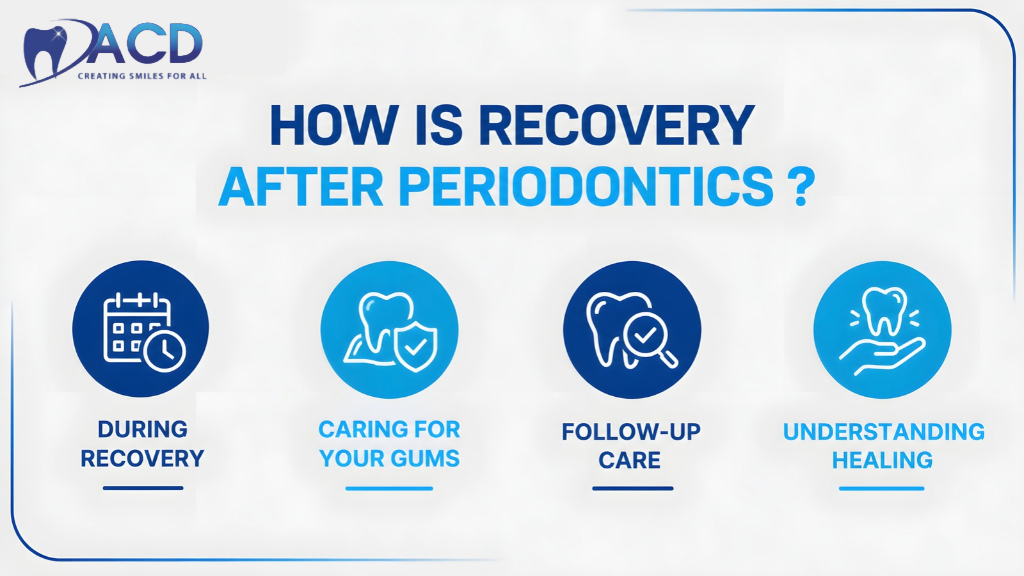
    How Is Recovery After Periodontics?

    Recovery varies depending on the type of Periodontics treatment you receive. Nonsurgical procedures may require little downtime, while Periodontal Surgery may involve a longer healing period.

    During Recovery

    • Mild tenderness, sensitivity, or swelling may occur as the treated gums heal.
    • Follow your dentist’s instructions for cleaning, eating, and taking medications.

    Caring for Your Gums

    • Keep the treated area clean as directed to support proper healing.
    • Choose softer foods temporarily if your gums feel tender or sensitive.

    Follow-Up Care

    • Attend follow-ups to monitor healing and support long-term gum health with Preventive Dentistry. 
    • Report unusual pain, swelling, bleeding, or other concerns promptly.

    Understanding Healing

    • Recovery time depends on the procedure and your individual healing response.
    • Your dentist can explain what to expect and provide guidance for a smoother recovery. Periodontal Surgery may require additional aftercare compared with nonsurgical treatment.

    Periodontics Treatment, Benefits, Signs & Recovery 

    TreatmentKey BenefitWhat to Expect
    Scaling & Root PlaningRemoves deep plaque and calculusMild sensitivity possible
    Gum Disease TreatmentControls gum infectionFollow-up may be needed
    Gum ShapingImproves gum appearanceShort healing period
    Periodontics BenefitsSupports healthy gums and teethRequires ongoing care
    Warning SignsIdentifies possible gum problemsProfessional evaluation needed
    Recovery & AftercareSupports proper healingFollow dentist’s instructions

    Why Choose Advanced & Comfort Dentistry for Periodontics?

    Choosing the right dental team for Periodontics in Whitehall, Pennsylvania means finding care that prioritizes clear communication, thorough evaluation, and your individual oral health needs. A comfortable treatment experience starts with understanding your condition, available options, expected outcomes, and the steps involved in maintaining healthy gums.

    At Advanced & Comfort Dentistry, patients receive personalized guidance about their periodontal condition, treatment choices, home-care routines, and follow-up needs. The team can also recommend Preventive Dentistry based on your oral health to help maintain healthier gums and support lasting treatment results. Patients can ask questions, discuss concerns, and understand what to expect before beginning care.

    For patients considering restorative treatment, your dentist can evaluate gum health before procedures involving Implant-Supported Bridges and determine whether any periodontal concerns should be addressed first. You can also review Periodontal Services for additional information about periodontal evaluation and treatment options.

    Conclusion

    Healthy gums play an important role in supporting your teeth and maintaining long-term oral health. Periodontics can help identify and manage gum problems before they become more serious, while good daily home care can help maintain your results.

    If you notice bleeding, swelling, gum recession, persistent bad breath, or changes around your teeth, a professional evaluation can help determine the cause. Patients considering treatment in Pennsylvania should discuss their symptoms and available options with a qualified dental professional.

    Choose Advanced & Comfort Dentistry for personalized Dental Veneers guidance and a smile plan tailored to your goals. Contact Us Today to learn more about your treatment options and Book a Free Consultation Now!

    Frequently Asked Questions

    1. When should I seek periodontal care?

    Bleeding, swollen gums, recession, persistent bad breath, or loose teeth can signal a gum problem. An evaluation can determine whether or routine preventive care is appropriate.

    2. Does periodontal treatment hurt?

    Treatment discomfort varies by procedure. Your dental team can use appropriate comfort measures and provide aftercare guidance to help manage temporary sensitivity or tenderness. Discuss what to expect before receiving Periodontics treatment.

    3. Can gum disease affect dental implants?

    Yes. Healthy gums and supporting bone help create a stable foundation for implants. Your dentist may assess your periodontal health before recommending implant treatment and related restorations.

    4. How can I protect my gums after treatment?

    Brush twice daily, clean between your teeth, maintain regular dental visits, and follow your dentist’s personalized home-care instructions. Consistent care can help maintain results after Periodontics treatment.

    5. What can happen if gum disease is untreated?

    Untreated gum disease can progress and damage the tissues and bone supporting your teeth. Early Periodontics care can help address the problem and support better long-term oral health.

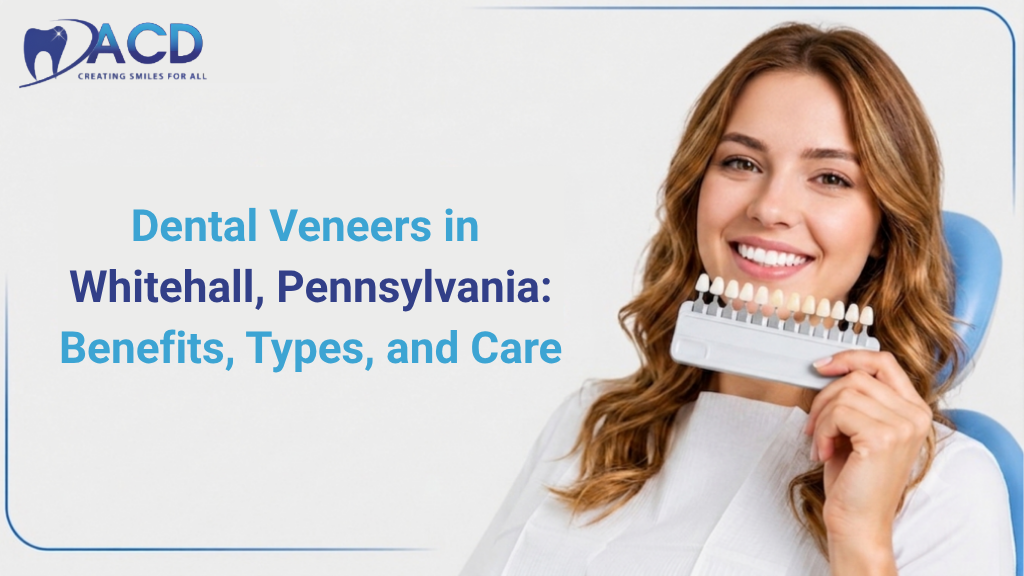
  • Dental Veneers in Whitehall, Pennsylvania: Benefits, Types, and Care

    Dental Veneers in Whitehall, Pennsylvania: Benefits, Types, and Care

    Dental Veneers can improve stained, chipped, uneven, or worn teeth while creating a balanced, natural-looking smile. Many patients choose this cosmetic option to enhance their teeth without replacing the entire tooth.

    Patients exploring Dental Veneers in Whitehall, Pennsylvania often have questions about types, treatment steps, maintenance, and longevity. Understanding these factors can help you decide whether veneers match your smile goals and oral health needs.

    At Advanced & Comfort Dentistry, a personalized consultation can help you understand your options and prepare for treatment. Learning how veneers work can help you move forward with greater confidence. Dental Veneers may be part of a personalized cosmetic treatment plan.

    What Are Dental Veneers?

    Dental Veneers are thin, tooth-colored shells placed over the front surfaces of teeth to improve the appearance of discoloration, minor chips, small gaps, and uneven shapes. They can help create a more balanced smile while maintaining a natural-looking appearance.

    Before treatment, a dentist checks your teeth, gums, bite, and overall oral health. Any cavities, gum concerns, or other dental problems may need treatment first to support a healthy foundation for cosmetic care.

    For patients considering Dental Veneers in Pennsylvania, treatment may include evaluation, tooth preparation, digital impressions, custom fabrication, bonding, and care instructions. Learn more about the Dental Veneers Procedure. 

    What Are the Benefits of Dental Veneers?

    1. Improve Tooth Color

    • Cover certain stains and discoloration.
    • Provide a more consistent tooth shade.
    • Create a brighter and more balanced smile.
    • Offer an option when whitening may not achieve the desired result.

    2. Create More Even Tooth Shapes

    • Improve the appearance of chipped or worn teeth.
    • Make uneven tooth edges look more consistent.
    • Support better tooth proportions.
    • Create a more balanced overall smile.

    3. Reduce the Appearance of Minor Gaps

    • Make small spaces between teeth less noticeable.
    • Improve the visual alignment of selected teeth.
    • Create a more uniform smile appearance.
    • Provide a cosmetic option for suitable cases.

    4. Create a Natural-Looking Smile

    • Closely mimic the appearance of natural enamel.
    • Match the veneer shade to your smile goals.
    • Improve tooth shape and proportions.
    • Create a balanced and natural-looking result.

    5. Support Long-Term Cosmetic Results

    • Maintain an attractive smile with proper care.
    • Good oral hygiene supports lasting results and helps patients understand Dental Veneers Benefits. 
    • Reduce unnecessary stress by avoiding hard objects.
    • Protect your investment through regular dental visits.

    Patients considering Dental Veneers in Whitehall can review Dental Veneers Pros and Cons 

    What Types of Dental Veneers Are Available?

    Porcelain Veneers

    • Provide a natural-looking appearance with strong stain resistance.
    • Offer a durable option for patients seeking long-term cosmetic results.
    • Can be customized to match the shape, shade, and proportions of your natural teeth.

    Composite Veneers

    • Offer a more conservative and cost-effective treatment option.
    • May require more maintenance and can stain more easily over time.
    • Can be suitable for patients seeking a simpler cosmetic approach for minor concerns.

    Choosing the Right Option

    • Consider your tooth condition, cosmetic goals, treatment expectations, and whether Dental Fillings are needed before cosmetic treatment.
    • Your dentist can recommend the right veneer type after assessing your oral health, bite, and smile needs.
    • Endodontics may be needed for underlying pulp or root concerns before starting cosmetic treatment.
    • Discuss the expected appearance, maintenance, durability, and overall treatment process before selecting your veneer type.

    Dental Veneers Types, Features and Best Considerations 

    TypeMain FeaturesBest Consideration
    Porcelain veneersDurable, natural-looking, stain-resistantPatients seeking a long-term cosmetic option
    Composite veneersTooth-colored resin, often completed more quicklyPatients seeking a simpler or more affordable approach
    Minimal-prep veneersRequire little or limited enamel alteration in suitable casesPatients with appropriate tooth shape and enamel
    Traditional veneersMay require some enamel preparationPatients needing more significant cosmetic changes

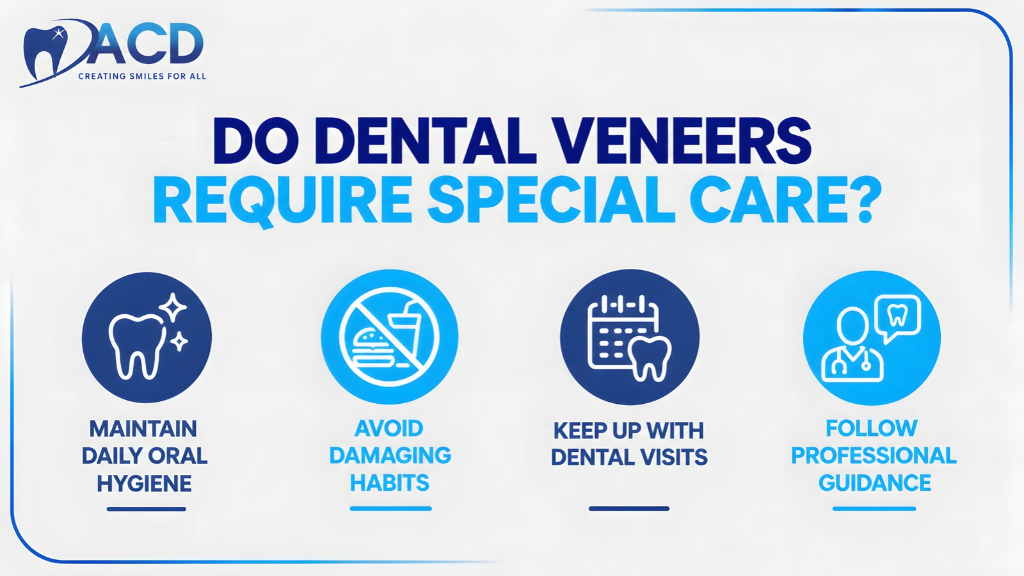
    Do Dental Veneers Require Special Care?

    Dental Veneers are easy to maintain with good oral hygiene and regular dental visits. Simple daily habits can help protect both the veneers and the natural teeth underneath them.

    1. Maintain Daily Oral Hygiene

    • Brush Regularly: Brush gently twice a day with fluoride toothpaste.
    • Clean Between Teeth: Floss or use an appropriate interdental cleaner every day.
    • Keep Gums Healthy: Good oral hygiene helps protect the gums around your veneers.

    2. Avoid Damaging Habits

    • Avoid Hard Objects: Do not bite ice, pens, fingernails, or other hard objects.
    • Protect Your Veneers: Use a nightguard if your dentist recommends one for grinding or clenching.
    • Avoid Excessive Pressure: Do not use your teeth to open packages or containers.

    3. Keep Up With Dental Visits

    • Schedule Checkups: Attend regular examinations and professional cleanings.
    • Monitor Oral Health: Periodontics care can help manage gum health when needed.

    4. Follow Professional Guidance

    • Follow Instructions: Use the care recommendations provided after veneer placement.
    • Monitor Your Smile: Report unusual sensitivity, chips, or changes to your dentist.
    • Use Dental Technology: Regular Dental Technology–supported evaluations can help monitor your oral health.

    Patients considering Dental Veneers in Pennsylvania should remember that veneers do not prevent decay or gum disease, so maintaining healthy natural teeth remains important.

    How Long Do Dental Veneers Last?

    The lifespan of Dental Veneers varies by material and patient habits. Porcelain veneers can last many years with proper care, while composite veneers may require earlier maintenance due to staining or wear.

    Factors That Affect Veneer Longevity

    • Veneer Material: Different materials have different durability and maintenance needs.
    • Oral Hygiene: Good daily care helps protect veneers and natural teeth.
    • Bite and Alignment: Proper alignment can reduce excessive pressure.
    • Grinding or Clenching: These habits may increase veneer wear or damage.
    • Lifestyle Habits: Avoiding hard foods and objects can help protect veneers.
    • Regular Dental Visits: Routine checkups help identify concerns early.

    Veneers are not permanent and may eventually need repair or replacement. Regular dental care protects the teeth around them. Patients with missing teeth may need Dental Implants, depending on their dental needs.

    Why Choose Advanced & Comfort Dentistry for Dental Veneers?

    Choosing Dental Veneers starts with finding a dental team that understands your smile goals, evaluates your oral health, and explains your treatment options clearly. A thorough evaluation can help ensure that cosmetic treatment aligns with your dental needs and expectations.

    Advanced & Comfort Dentistry provides personalized guidance so patients can discuss veneer materials, expected results, maintenance, and treatment needs before moving forward. The team also focuses on clear communication throughout the treatment process, helping patients understand each step before treatment begins.

    A personalized consultation can help determine the most suitable approach and whether veneers are an appropriate cosmetic option for your smile. If underlying dental concerns require attention, Root Canal Therapy may be recommended before cosmetic treatment to help support the health of the affected tooth.

    Conclusion

    Dental Veneers can improve the appearance of discolored, chipped, uneven, or mildly irregular teeth. Successful results depend on proper planning, healthy teeth and gums, and consistent home care.

    Before choosing Dental Veneers in Whitehall, discuss the material, preparation, expected lifespan, maintenance, and available alternatives with your dentist. Advanced & Comfort Dentistry can help you understand your options and determine whether veneers fit your smile goals.

    Choose Advanced & Comfort Dentistry for personalized Dental Veneers guidance and a smile plan tailored to your goals. Contact Us Now to learn more about your treatment options and Book a Free Consultation today!

    Frequently Asked Questions

    1. Are Dental Veneers permanent?

    No. They can last for many years with proper care, but they may eventually need repair or replacement.

    2. Can Dental Veneers fix chipped teeth?

    Yes. They can improve the appearance of minor chips and uneven edges when the tooth is otherwise healthy.

    3. Can Dental Veneers cover stained teeth?

    Yes. They can cover certain discoloration and create a more even tooth shade.

    4. Can I eat normally after treatment?

    Yes. Most patients can return to normal eating after receiving their dentist’s instructions. Avoiding very hard foods can help protect the veneers.

    5. How should I care for Veneers?

    Brush twice daily, clean between your teeth, attend regular dental visits, and avoid biting hard objects to help maintain your smile.

  • Step-by-Step Guide: Preparing for Your Oral Surgery in Whitehall, Pennsylvania

    Step-by-Step Guide: Preparing for Your Oral Surgery in Whitehall, Pennsylvania

    Preparing for Oral Surgery can feel uncertain, especially when you do not know what will happen before treatment, what recovery will involve, or how to manage discomfort afterward. Understanding the process can help you feel more prepared and make it easier to follow your dental team’s instructions.

    Patients considering Oral Surgery in Whitehall may need treatment for an impacted tooth, a severely damaged tooth, certain gum or jaw conditions, or preparation for future tooth replacement. Your dentist will evaluate your oral health, medical history, medications, and treatment goals before recommending an appropriate procedure.

    This guide explains what Oral Surgery involves, how patients can prepare, what to avoid after treatment, how to manage discomfort, and when professional follow-up may be necessary.

    What Is Oral Surgery?

    Oral Surgery involves procedures that diagnose or treat conditions affecting the teeth, gums, jaw, and surrounding structures. Treatment depends on the specific condition and overall dental health.

    Common procedures include tooth removal, impacted teeth treatment, certain infection-related surgeries, and procedures supporting restorative care. Patients researching Oral Surgery in Pennsylvania can review Oral Surgery Procedures for an overview.

    Before Oral Surgery, your dentist may perform an examination and take digital X-rays or other imaging to evaluate tooth position, bone structure, and treatment needs. 

    How Should You Prepare for Your Oral Surgery Procedure?

    Medical & Treatment Information

    • Complete Medical History: Share your current medications, allergies, medical conditions, and any previous reactions to anesthesia or medication.
    • Treatment Instructions: Follow your dentist’s instructions about eating, drinking, medications, and preparation before your Oral Surgery.

    Transportation & Recovery Planning

    • Arrange Transportation: If sedation or anesthesia is planned, arrange for a responsible adult to drive you home and stay with you as advised.
    • Prepare Your Recovery Area: Keep soft foods, water, prescribed medications, clean gauze, and other recommended supplies ready at home.

    Procedure-Specific Preparation

    • Wisdom Teeth Removal: Plan for possible swelling, limited chewing, and temporary changes to your normal activities.
    • Implant Dentistry: Follow all imaging, dietary, medication, and scheduling instructions provided during treatment planning.

    Personal Preparation

    • General Dentistry Care: Discuss your overall dental health and any ongoing General & Restorative Dentistry  needs with your dental team before your procedure. 
    • Patient Questions: Ask your dental team about anything you do not understand before your Oral Surgery in Pennsylvania appointment.

    What Should You Avoid After Oral Surgery Treatment?

    • Avoid Smoking & Vaping: These habits can interfere with healing and may increase the risk of complications after Oral Surgery.
    • Protect the Surgical Area: Avoid aggressive rinsing, spitting, or touching the treated area unless your dental team gives different instructions.
    • Choose Safe Foods: Stay away from hard, crunchy, or very hot foods while your mouth remains sensitive.
    • Limit Strenuous Activity: Give your body time to heal and avoid intense exercise until your dentist confirms that it is safe.
    • Follow Treatment Instructions: After Tooth Extractions, follow care instructions carefully to protect the blood clot and support proper healing.
    • Know Your Aftercare Needs: Patients receiving Gum Disease Treatment or Oral Surgery in Whitehall should keep their post-treatment instructions available and contact their dental team whenever they are unsure about food, activity, or 0medication.

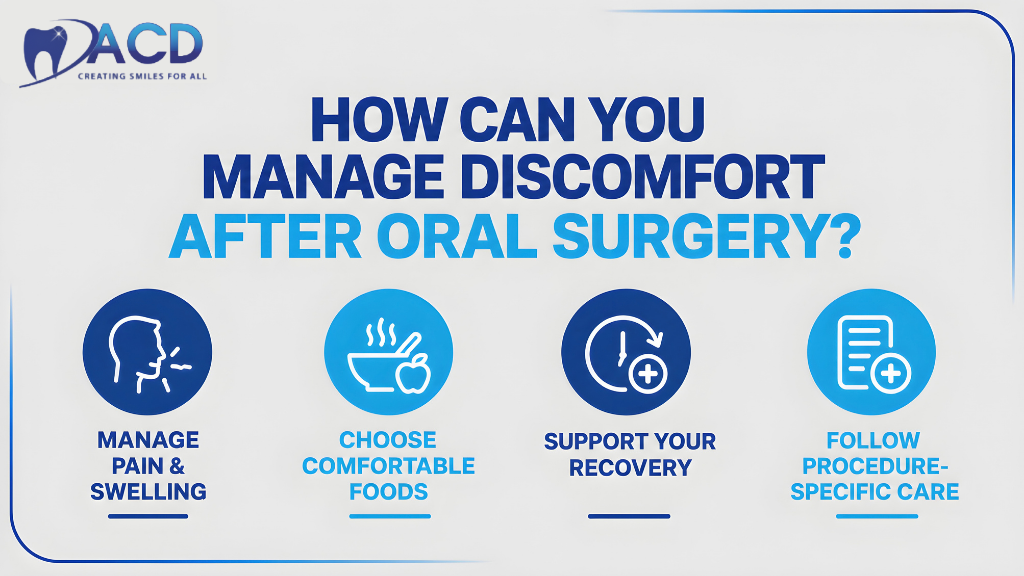
    How Can You Manage Discomfort After Oral Surgery? 

    1. Manage Pain & Swelling

    • Follow Medication Instructions: Take prescribed pain-relief medication exactly as directed and ask your dentist before combining it with over-the-counter medicines.
    • Use Cold Compresses: Applying a cold compress as recommended may help reduce early swelling and discomfort.

    2. Choose Comfortable Foods

    • Eat Soft Foods: Choose foods that require minimal chewing while your mouth heals after Oral Surgery.
    • Stay Hydrated: Drink plenty of water and avoid foods or drinks that may irritate the treated area.

    3. Support Your Recovery

    • Get Enough Rest: Give your body enough time to recover and avoid activities that increase discomfort.
    • Elevate Your Head: Sleeping with your head slightly elevated may help reduce swelling for some procedures.

    4. Follow Procedure-Specific Care

    • Follow Individual Instructions: Patients receiving Cosmetic Gum Shaping may have different aftercare instructions than patients recovering from a surgical extraction.
    • Monitor Recovery: Review the Oral Surgery Recovery Timeline for general recovery guidance, but always prioritize your dentist’s specific instructions.

    When Should You Call Your Dentist After Oral Surgery? 

    Severe or Worsening Symptoms

    • Persistent Bleeding: Contact your dentist if bleeding remains heavy or does not improve as expected.
    • Severe Pain: Seek professional advice when pain remains intense or does not improve with recommended medication.
    • Increasing Swelling: Contact your dental team if swelling continues to worsen instead of gradually improving.

    Signs of Possible Complications

    • Fever or Infection: Report fever, unusual discharge, or other possible signs of infection after Oral Surgery in Pennsylvania.
    • Breathing or Swallowing Problems: Seek immediate professional guidance if swelling or discomfort makes breathing or swallowing difficult.
    • Unexpected Medication Reactions: Contact your dentist if you experience an unusual or concerning reaction to prescribed medication.

    When Recovery Seems Unusual

    • Healing Concerns: Call your dentist when symptoms suddenly worsen or recovery looks different from the instructions you received.
    • Professional Evaluation: Oral and maxillofacial surgery covers surgical conditions involving the mouth, jaws, face, and related structures, making professional evaluation important when concerns arise.

    Oral Surgery Treatment and Recovery Stages 

    Key StageMain GoalCommon ChallengeExpected Result
    Initial ConsultationUnderstand treatment needsUnclear concernsClear treatment plan
    Medical ReviewCheck health and medicationsMissing medical detailsSafer treatment
    Treatment PlanningPlan the procedurePatient uncertaintyBetter preparation
    Pre-Surgery PreparationPrepare for treatmentNot following instructionsSmoother procedure
    Oral SurgeryComplete planned treatmentAnxiety or discomfortSuccessful treatment
    Pain & Swelling CareManage discomfortSwelling or painMore comfortable recovery
    Recovery & AftercareSupport proper healingPoor aftercareFaster, safer healing
    Follow-UpCheck healing progressMissed appointmentsHealthy recovery

    Why Choose Advanced & Comfort Dentistry for Oral Surgery?

    Choosing the right dental team can make treatment feel more manageable. At Advanced & Comfort Dentistry, clear communication, careful planning, and comfort-focused care help patients understand their procedure and feel prepared before treatment begins.

    Patients planning Oral Surgery in Whitehall, Pennsylvania can ask about their treatment needs, expected recovery, medications, dietary restrictions, and warning signs. Having clear answers can make it easier to make informed decisions and follow the recommended aftercare plan.

    Depending on individual needs, surgical care may also involve services such as Bone Grafting or Implant Dentistry when tooth replacement or jawbone support is part of the treatment plan. The goal is to protect oral health while supporting long-term function, comfort, and confidence.

    Conclusion

    Preparing for Oral Surgery starts with knowing what will happen, following your provider’s instructions, and planning for recovery before your appointment. Give yourself time to organize medications, transportation, meals, and rest. After treatment, protect the surgical area, manage discomfort as directed, and watch for symptoms that require professional attention.

    When you understand each step, treatment can feel less intimidating. Advanced & Comfort Dentistry can support you with patient-centered guidance and a clear plan built around your needs. 

    The team at Advanced & Comfort Dentistry guides you through every practical step of recovery. Contact Us Today to ask questions and Book an Appointment for personalized care. 

    Frequently Asked Questions

    1. How long should I plan to rest after Oral Surgery?

    Recovery depends on the procedure and your health. Some patients need limited downtime, while more involved treatment may require several days. Your provider can give you a personalized recovery estimate.

    2. Can I eat before treatment?

    Eating instructions depend on the procedure and whether sedation or anesthesia is involved. Follow the specific instructions provided by your dental team before treatment.

    3. How do I sleep after treatment?

    Rest as instructed, keep your head elevated when recommended, and avoid placing pressure on the treated area. Your provider may provide additional instructions based on your procedure.

    4. When can I return to exercise after treatment?

    Light activity may resume sooner than strenuous exercise, but timing varies. Follow your provider’s restrictions and gradually return to normal activities rather than exercising through pain or swelling.

    5. What is the best way to prepare for Oral Surgery?

    Follow all pre-treatment instructions, share your medication and health history, arrange transportation when needed, prepare soft foods, and attend your follow-up appointment. For Oral Surgery in Pennsylvania, contact your dental team if any instruction is unclear.

  • Everything You Need to Know About Restorative Dentistry in Whitehall, Pennsylvania

    Everything You Need to Know About Restorative Dentistry in Whitehall, Pennsylvania

    Restorative Dentistry helps repair damaged, decayed, or missing teeth, improving oral function, comfort, and confidence. These treatments can restore the health and appearance of teeth while supporting better everyday eating and speaking.

    Patients searching for Restorative Dentistry in Whitehall may have several treatment options depending on their dental condition and long-term oral health goals. Common solutions include Dental Fillings, Crowns, Bridges, and Dentures.

    This guide explains common Restorative Dental Treatment their potential benefits, and important factors to consider when choosing the right treatment for your smile and overall oral health.

    What Is Restorative Dentistry?

    Restorative Dentistry focuses on repairing damaged teeth and replacing missing teeth to restore chewing, speech, bite stability, and overall oral function.

    Unlike routine preventive care, Restorative Treatment addresses problems caused by decay, injury, fractures, significant wear, or tooth loss. The recommended treatment depends on each patient’s condition, whether one tooth or several teeth need attention.

    Common concerns include cavities, cracked teeth, worn enamel, damaged fillings, and missing teeth. Treatments such as Dental Fillings can repair decay while preserving natural tooth structure.

    Who Is the Ideal Candidate for Restorative Dentistry?

    Many patients may need Restorative Dentistry at some point in their lives, but certain dental concerns make an evaluation particularly important.

    Patients With Tooth Decay

    • Patients with visible cavities or active tooth decay may need treatment to repair the affected tooth.
    • Early treatment can help protect the remaining natural tooth structure.

    Patients With Damaged Teeth

    • Cracked, chipped, or fractured teeth may require restorative treatment to improve strength and function.
    • Teeth weakened by previous dental treatment may also need additional care.

    Patients With Missing Teeth

    • Patients missing one or more teeth may benefit from restorative treatment designed to replace lost tooth structure.
    • Patients who have lost several teeth may benefit from Dentures depending on their individual needs.

    Patients With Chewing or Biting Difficulties

    • Discomfort while chewing may indicate a damaged, weakened, or missing tooth.
    • Difficulty biting can also be a reason to schedule a dental evaluation.

    Patients With Gum-Related Concerns

    • Patients with gum-related problems may need their periodontal health evaluated before restorative treatment.
    • Periodontics may be incorporated into a broader treatment plan when gum care is needed.

    Patients of different ages can require Restorative Dental Care for different reasons, including decay, accidents, long-term tooth wear, or tooth loss. 

    How Many Types of Restorative Dentistry?

    Restorative Dentistry Procedures,The right option depends on the extent of tooth damage, the location of the affected tooth, and the patient’s overall oral health. 

    1. Dental Fillings

    • Treats Tooth Decay: Dental Fillings are commonly used to repair teeth affected by cavities and restore damaged areas.
    • Preserves Tooth Structure: Removing decay and filling the affected area can help protect the remaining natural tooth structure.

    2. Dental Crowns

    • Protects Weak Teeth: A dental crown covers and protects a weakened or significantly damaged tooth while restoring its shape and function.
    • Restores Strength and Function: Crowns can help restore the tooth’s strength while protecting the remaining natural structure.
    • Same-Day Convenience: For eligible patients, Same-Day Crowns may allow certain crown treatments to be completed during a single visit.

    3. Dental Bridges

    • Replaces Missing Teeth: A bridge can replace one or more missing teeth by using supporting teeth or structures to hold the replacement tooth in place.
    • Supports Chewing Function: Dental Bridges can help restore chewing ability while maintaining a more complete-looking smile.

    4. Dentures

    • Replaces Multiple Missing Teeth: Dentures can replace several missing teeth or an entire arch, depending on the patient’s needs.
    • Supports Daily Function: Dentures can help patients speak and chew more comfortably after tooth loss.
    • Maintains Appliance Condition: Proper Denture Care is important for cleanliness, comfort, and maintaining the condition of the appliance.

    5. Root Canal Therapy

    • Treats Tooth Infection: Root canal therapy addresses infection or inflammation inside a tooth by removing the affected pulp.
    • Preserves the Natural Tooth: When the tooth can still be restored, treatment may help preserve the natural tooth instead of removing it.

    6. Dental Implants

    • Replaces Missing Teeth: Dental implants replace a missing tooth by supporting a restoration from within the jaw.
    • Provides Stable Support: Implants can provide a stable restorative option for selected patients who meet the appropriate clinical requirements.

    Patients may need one treatment or a combination of treatments depending on the condition of their smile. A professional evaluation can help determine which Restorative Dental Services option best fits their individual needs.

    What Are the Benefits of Restorative Dentistry?

    Restorative Dentistry does more than repair an individual tooth. Appropriate treatment can influence how patients eat, speak, maintain oral health, and feel about their smiles.

    Improved Oral Function

    • Helps restore normal chewing and biting
    • Can reduce difficulty when eating
    • Supports comfortable everyday oral function

    Protection Against Further Damage

    • Addresses tooth decay and structural damage
    • Helps protect weakened teeth from additional breakdown
    • May reduce the chance of more extensive treatment later

    Support for Long-Term Oral Health

    • Helps maintain functional tooth structure
    • Supports healthier spacing and bite relationships
    • Can help protect surrounding teeth when appropriate treatment is provided

    Improved Confidence

    • Can restore the appearance of damaged or missing teeth
    • May reduce self-consciousness about smiling
    • Helps patients feel more comfortable during everyday interactions

    For patients considering Restorative Dentistry in Whitehall, understanding these key Restorative Dentistry Benefits can make it easier to discuss options with a dental professional. 

    How Is Restorative Dentistry Different From Cosmetic Dentistry?

    • Restorative Dentistry focuses mainly on restoring the health, strength, and function of damaged or missing teeth.
    • Cosmetic Dentistry primarily focuses on improving the appearance of teeth, including their color, shape, and alignment.
    • Restorative treatments, such as crowns and fillings, can improve both function and appearance.
    • Some patients may need Periodontics for gum-related concerns before restorative treatment.
    • Oral Surgery may be recommended for certain complex dental conditions requiring additional care.
    • Patients seeking Restorative Dentistry in Whitehall, Pennsylvania should discuss both their functional needs and cosmetic goals with their dentist.

    Restorative Dentistry vs. Cosmetic Dentistry: Key Differences

    CategoryRestorative DentistryCosmetic Dentistry
    Primary GoalRepair function and structureImprove appearance
    Common TreatmentsFillings, crowns, bridges, denturesVeneers, whitening, cosmetic bonding
    Main FocusOral health and functionalitySmile aesthetics
    Typical PurposeRestore damaged or missing teethEnhance visual appearance
    Dental HealthAddresses decay, damage, fractures, and tooth lossUsually focuses on improving the look of healthy teeth
    Long-Term BenefitHelps restore chewing, bite stability, and oral functionHelps improve confidence and smile appearance
    Treatment NeedOften medically or functionally necessaryUsually elective or appearance-focused

    Why Choose Advanced & Comfort Dentistry for Restorative Dentistry?

    Advanced & Comfort Dentistry provides personalized restorative care based on each patient’s dental condition, oral health, concerns, and long-term goals. This approach helps ensure that treatment is tailored to the patient’s specific needs.

    Patients seeking Restorative Dentistry in Pennsylvania can discuss their symptoms, treatment options, expected results, and maintenance needs before beginning treatment. Clear communication helps patients feel informed and more comfortable throughout the process.

    From fillings and crowns to replacing missing teeth, Advanced & Comfort Dentistry focuses on helping patients understand each stage of treatment while keeping comfort, function, and long-term oral health at the center of care.

    Conclusion

    Restorative Dentistry helps patients address damaged, decayed, worn, or missing teeth while working toward improved oral function and comfort. Treatment may range from a simple filling to crowns, bridges, dentures, or other restorative solutions based on each patient’s needs.

    Patients considering Restorative Dentistry in Whitehall, Pennsylvania can benefit from a professional evaluation that identifies the source of their dental concerns and explains the available treatment options.

    Advanced & Comfort Dentistry helps you find the ideal restorative treatment tailored to your unique needs. Contact Us Today to learn more and Book Your Appointment for a healthier, more comfortable smile.

    Frquently Asked Questions (FAQs)

    1. What Is the Main Goal of Restorative Dental Care?

    The main goal of Restorative Dentistry is to repair damaged or decayed teeth and replace missing teeth so patients can regain better oral function, comfort, and stability.

    2. Who Needs Restorative Dentistry Treatment?

    Patients with cavities, cracked or broken teeth, missing teeth, damaged restorations, significant tooth wear, or difficulty chewing may benefit from restorative treatment after a professional evaluation.

    3. Is Restorative Dentistry Painful?

    The experience depends on the procedure and the patient’s individual condition. Modern dental techniques and appropriate comfort measures are used to help make restorative treatment as comfortable as possible.

    4. How Long Do Restorative Treatments Last?

    The lifespan of a restoration varies by treatment type, oral health, daily habits, and maintenance. Regular dental care and good oral hygiene can help protect restorative work over time.

    5. How Do I Know Which Restorative Treatment I Need?

    The best way to determine the appropriate treatment is to schedule an evaluation. Advanced & Comfort Dentistry can assess the condition of your teeth and explain which options may best support your oral health and goals.

  • Cosmetic Dentistry Services in Whitehall, Pennsylvania: What to Know

    Cosmetic Dentistry Services in Whitehall, Pennsylvania: What to Know

    Cosmetic Dentistry Services can offer a personalized way to enhance your smile if you feel self-conscious about stained, chipped, uneven, or slightly misaligned teeth. Treatment is selected based on your teeth, gums, bite, oral health, and desired results rather than a one-size-fits-all approach.

    For patients comparing smile-enhancement options, understanding the treatment process, candidacy, safety, and long-term care can make the decision easier. Patients searching for Cosmetic Dentistry near me in Whitehall can begin with a consultation focused on their cosmetic concerns, oral health, and smile goals. 

    A personalized evaluation can determine which treatments may suit your needs and whether preparatory dental care is necessary. With the right approach, Cosmetic Dentistry Services can help create a more balanced and confident smile.

    What Are Cosmetic Dentistry Services?

    Cosmetic Dentistry Services are dental treatments designed primarily to improve the appearance of the teeth, gums, or smile, using options such as whitening, bonding, veneers, or reshaping. Cleveland Clinic notes that cosmetic dentistry commonly focuses on improving smile balance and symmetry, with treatments such as whitening, bonding, and veneers.

    Cosmetic Dentistry Services can address one small imperfection or support a broader smile transformation. Treatment may include examination, consultation, treatment selection, procedure, and follow-up care. The process can range from a single visit to several appointments depending on the option chosen.

    Patients researching smile enhancement can learn more about available treatment options through Cosmetic Family Dentistry. Cosmetic Dentists in Pennsylvania may also recommend restorative or periodontal care first when active oral health issues could affect cosmetic treatment planning.

    How Do Cosmetic Dentistry Services Improve Your Smile?

    Addressing Common Cosmetic Concerns

    • Stained Teeth: Cosmetic treatments can improve the appearance of certain types of discoloration and staining.
    • Chipped or Uneven Teeth: Treatments may help improve the shape, symmetry, and overall appearance of teeth.
    • Gaps & Minor Imperfections: Selected procedures can address certain spaces, irregularities, and other aesthetic concerns.

    Personalized Smile Enhancement

    • Customized Treatment: Your dentist can recommend options based on your tooth condition, facial appearance, bite, and smile goals.
    • Natural-Looking Results: Treatment can be planned to create a balanced appearance that complements your existing teeth.

    Supporting Overall Appearance

    • Smile Balance: Improving tooth color, shape, or proportion can create a more coordinated smile.
    • Confidence Support: A smile that better matches your aesthetic preferences may help you feel more comfortable during social and professional interactions.

    Professional Evaluation

    • Comprehensive Assessment: Your dentist can examine your teeth and gums before recommending treatment.
    • Individual Planning: Patients searching for Cosmetic Dentists in Whitehall, Pennsylvania can discuss their concerns and treatment expectations during a consultation.

    For additional information, review this Cosmetic Dentistry Treatments resource. A personalized Smile Makeover may also be considered when multiple cosmetic concerns need to be addressed.

    Are Cosmetic Dentistry Services Safe?

    During Treatment

    1. Professional Evaluation: Treatment should be selected after assessing your teeth, gums, bite, and overall oral health.
    2. Appropriate Procedures: Your dentist can recommend the option that best fits your cosmetic concerns and dental condition.
    3. Some treatments, including whitening and bonding, may be relatively conservative depending on the patient’s needs.

    After Treatment

    1. Possible Sensitivity: Some procedures may cause temporary sensitivity or require a short adjustment period.
    2. Aftercare Instructions: Following your dentist’s recommendations can help protect your results and oral health.
    3. Follow-Up: Regular dental visits allow your dentist to monitor your teeth and address concerns.

    Preparing for Treatment

    1. Oral Health: Existing dental problems may need to be addressed using Dental Technology before cosmetic treatment. 
    2. Dental Conditions: Decay, gum disease, infection, or other concerns may affect treatment planning.
    3. Medical History: Your dental team should be informed about relevant medical and dental conditions.

    Treatment Longevity

    1. Varied Results: The durability of cosmetic treatment depends on the procedure, oral hygiene, lifestyle, and individual dental condition.
    2. Maintenance: Proper care and regular dental appointments can help preserve the appearance and function of treated teeth.

    For additional information, review this Cosmetic Dentistry Procedures overview from Cleveland Clinic.

    What Are the Benefits of Cosmetic Dentistry Services?

    1. Brighter Smile

    • Helps improve the appearance of certain stains and discoloration
    • Creates a brighter and more refreshed tooth appearance
    • Can contribute to a more confident-looking smile

    2. Improved Tooth Shape

    • Can address minor chips, gaps, and irregular tooth shapes
    • Supports better visual balance between teeth
    • Dental Bonding may help improve the appearance of selected minor imperfections.

    3. Enhanced Confidence

    • May improve comfort when smiling in social situations
    • Supports a coordinated and personalized smile appearance
    • Can help patients feel more confident about their overall smile

    4. Personalized Treatment

    • Treatment can be selected according to individual cosmetic concerns
    • Options may range from minor aesthetic improvements to broader smile enhancements
    • Proper oral hygiene and regular dental visits can help maintain results

    For more information, review this Cosmetic Dentistry Treatments resource.

    Cosmetic Dentistry Services Right for Me?

    Oral Health & Cosmetic Concerns

    • You may benefit from treatment if you have discoloration, small chips, uneven tooth shapes, gaps, or certain aesthetic concerns.
    • Good oral health provides an important foundation for cosmetic treatment.

    Dental Examination & Planning

    • Your dentist may assess tooth colour, shape, proportion, alignment, gums, and bite.
    • The evaluation helps determine which procedure may be appropriate for your needs.

    Existing Dental Conditions

    • Active decay, gum disease, infection, or other dental issues may need treatment before cosmetic care.
    • Endodontics can help manage tooth pulp or root canal concerns before cosmetic treatment.

    Individual Evaluation

    • Suitability depends on your oral health, cosmetic goals, expectations, and overall treatment needs.
    • A consultation can help determine whether Cosmetic Dentistry Services are appropriate for your specific situation.
    • Clear Aligner treatment may be considered for certain alignment concerns when appropriate for your teeth and bite. 
    • Restorative Dentistry may be recommended when underlying tooth damage or structural concerns require attention.

    Patients considering cosmetic treatment can also discuss whether Smile Makeover or Dental Bonding may fit their goals.

    Cosmetic Dentistry Services: Benefits, Safety & Results 

    Treatment Area Key PointsWhat It Means 
    BenefitsBrighter smile, improved shape, confidenceImproves color, shape, balance, and overall smile confidence.
    During TreatmentProfessional evaluation, conservative optionsThe right procedure is selected based on your specific concern.
    After TreatmentMild sensitivity, adjustment periodMinor sensitivity may occur and usually improves with time.
    LongevityReversible to longer-lasting optionsFollow your dentist’s instructions to maintain your results.
    SafetyQualified evaluation, realistic expectationsSafety depends on proper diagnosis and following aftercare guidance.
    Additional TreatmentRestorative or periodontal careSome patients may need extra treatment for a stable foundation.

    Why Choose Advanced & Comfort Dentistry for Cosmetic Dentistry Services?

    Choosing the right cosmetic dental practice involves more than focusing on appearance alone. Advanced & Comfort Dentistry takes a comprehensive approach by considering your oral health, smile goals, dental concerns, and treatment needs when developing a personalized plan for Cosmetic Dentistry Services.

    The practice can evaluate your teeth, gums, bite, and overall oral condition to help determine which cosmetic options may be suitable. If underlying concerns need attention before cosmetic treatment, Endodontics or other restorative care may be recommended as part of the overall treatment plan.

    Patients researching Cosmetic Dentists in Pennsylvania can discuss their cosmetic concerns, treatment expectations, and maintenance needs during a consultation. For patients who also require routine oral care,General & Restorative Dentistry can help support their overall dental health.

    Conclusion

    Cosmetic Dentistry Services can provide a personalized, natural-looking solution for enhancing your smile while supporting confidence and overall appearance. Successful treatment depends on proper evaluation, healthy teeth and gums, realistic expectations, and following your dentist’s maintenance instructions.

    Choosing the right dental provider can make the treatment process more comfortable and predictable. Advanced & Comfort Dentistry can evaluate your individual needs, explain available cosmetic options, and develop a personalized treatment plan based on your oral health and long-term goals.

    Enhance your smile with a personalized approach to Cosmetic Dentistry Services. Advanced & Comfort Dentistry can evaluate your needs and discuss suitable treatment options. Contact Us Today and Schedule Your Consultation. 

    Frequently Asked Questions (FAQS)

    1. How long does the Cosmetic Dentistry Services process take?

    The timeline depends on the specific treatment, your oral health, and treatment complexity. Some options take a single visit, while others may extend over several appointments before final results are achieved.

    2. Can Cosmetic Dentistry Services address several concerns at once?

    Yes. Treatment can combine multiple procedures such as whitening, bonding, or veneers as part of a coordinated smile plan. Your dentist will determine the most suitable approach based on your oral health and aesthetic goals.

    3. What should I avoid after cosmetic dental treatment?

    Follow your dentist’s instructions regarding diet, oral hygiene, and habits specific to your treatment. Avoid habits that could affect your results while the treatment settles or adjusts.

    4. How long can cosmetic dental results last?

    With proper oral hygiene and regular dental visits, cosmetic results can last from months to many years depending on the treatment. Their lifespan depends on your oral health, maintenance, and the specific procedure chosen.

    5. Is restorative treatment always required before cosmetic treatment?

    No. Restorative or periodontal treatment is generally considered when active oral health issues could affect cosmetic planning. Your dentist can determine whether additional treatment is necessary after your evaluation.